Using Technology to Enhance Observation
These days, it’s getting harder and harder to remove ourselves from technology.
Our phones buzz, watches beep, and – in the not-so-distant future – our glasses will light up with text messages, emails, and notifications for this, that or the other thing. On a walk outdoors, all of these things can serve to remind us of our responsibilities and thus take us away from being fully immersed in nature.
As a result, it can be easy to view technology and nature as two distinct things. Some students from UC Berkeley, however, didn’t see it this way and were determined to shift this perception. Enter iNaturalist, a citizen science platform that has somehow cracked the code to keep us connected to nature, aided by technology.
So what is iNaturalist, anyway? Well, to steal their own words, iNaturalist’s mission is to “connect people to nature and advance biodiversity science and conservation.” The basic premise of the platform is that users upload photos or audio of the organisms they see and provide an identification for what they think it is. From there, others can view these uploads (called “observations”) and confirm or help to identify them further. These observations serve as a repository that users can quickly reference to find information on what, when, and where an organism was seen, and are then cataloged in a global biodiversity database to inform species distributions throughout the landscape.
Don’t know what something is? iNaturalist’s ability to aid as a learning tool is immense. First, when uploading an observation, iNaturalist’s “computer vision” will suggest a list of possible species in order of most to least probable. It can do this for any group of life, from plants to insects, fish, birds and so on. From there, a user can conduct future research to identify the species and increase their knowledge of the natural world.
In addition, after uploading, any other user can confirm your observation in the event they are familiar with the species. The utility of the website has attracted the attention of experts in various taxonomic fields who are charitable with their knowledge in helping with the identification of organisms.
Careful, it Can be Addicting
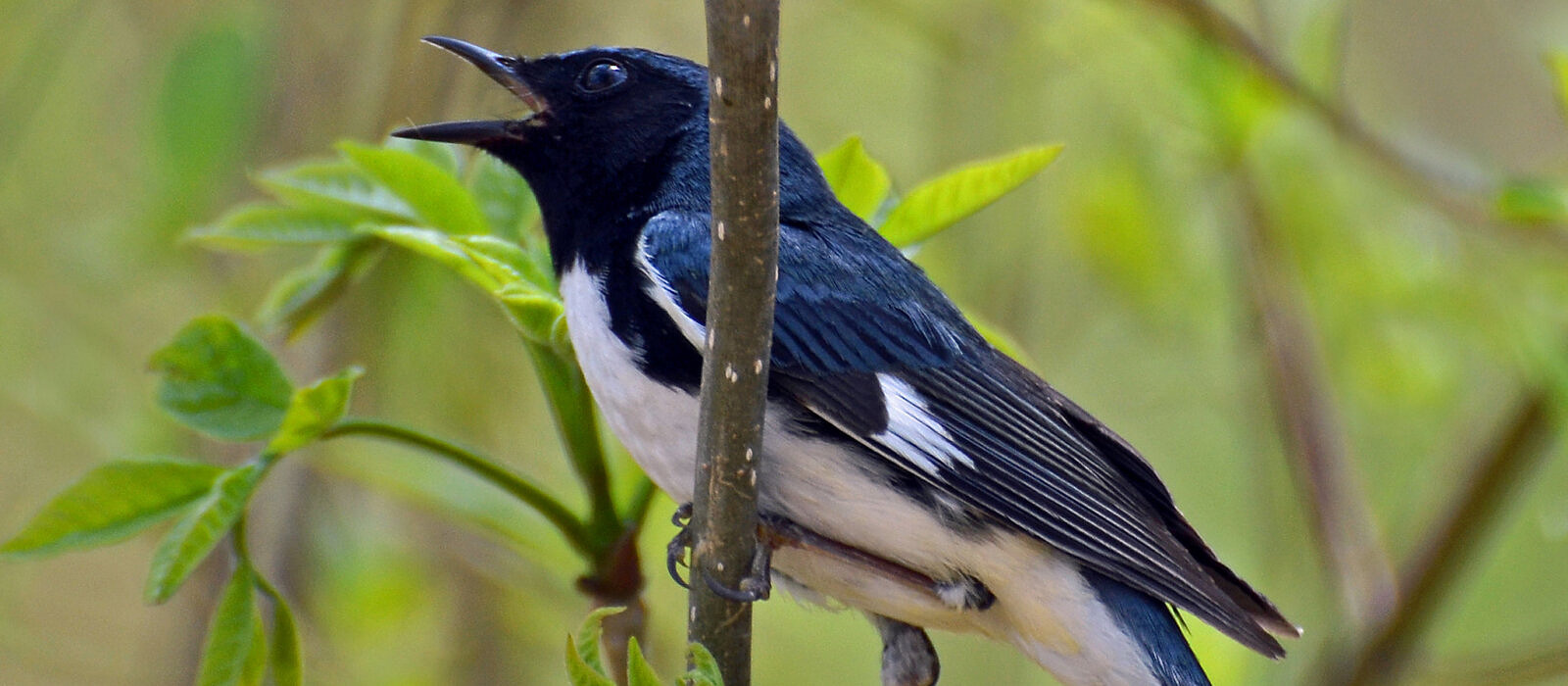
The combination of being a catalog for one’s sightings and the opportunity to learn about what you’re seeing is addicting, and boy, is it easy to get hooked. As I write this article, my attention is repeatedly drawn to a Black-throated blue warbler flitting around in the understory, a species which I have yet to document in my yard.
In addition to that, during this writing session, I’ve also documented (or “iNatted”) six other species of birds and three species of insects without leaving my chair. The Black-throated blue warbler is the 32nd species of bird I’ve iNatted from the deck, each of which I can easily refer back to in order to remember the exact date when they were seen.
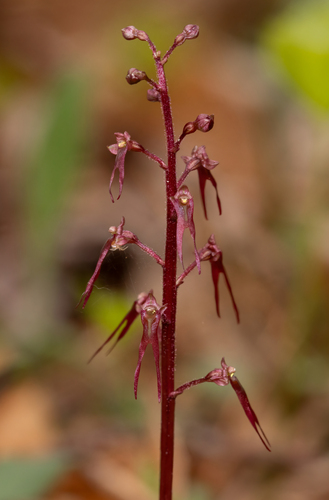
Southern Twayblade (Neottia bifolia)
(photo © Nicholas Wei/iNaturalist)
Another amazing aspect is that one does not need to be an expert to make significant discoveries. I know very little about Neottia orchids, but in taking a picture of a plant I didn’t recognize and uploading it to iNaturalist, I was able to document the first known population of Southern twayblade on the mainland in Massachusetts. Also, aided by the help of a gall expert, I was also able to capture the first known images of a gall wasp, Xanthoteras radicola, which eventually turned out not to be the first photo when another observation of a gall wasp from Manitoba was later identified as this species by experts on iNaturalist.
Even right here in my own yard, I was able to document the first iNaturalist observation of a hornwort, Phaeoceros carolinianus, in New Hampshire.
Of greater magnitude than my minor discoveries, the platform has also led to the discovery of completely new species of plants and insects and even poison dart frogs. Even more locally, two years ago a globally rare orchid, small whorled pogonia, was rediscovered in Vermont, a species which has thought to have been extinct in the state for more than 100 years. The resources required for biologists to survey as thoroughly as iNaturalist does using community science would be colossal.
In short, iNaturalist is essentially a social media site for nature nerds where users can post their observations and view and identify the observations of others. In this way, it enhances our connection with nature by increasing our understanding of organisms and engaging with the outdoors on the web, even if we cannot get outside. All the while, these observations are serving to enhance our understanding of species throughout the landscape.
With little to no barrier to entry, iNaturalist has created a platform in which anyone can learn about what they see and participate in community science, using technology to help engage with or even enhance one’s outdoor experience.
To get a sense for what kind of species are being observed locally – and to add your own observations – check out the Harris Center’s “Biodiversity in the SuperSanctuary” project at harriscenter.org/inaturalist.
Nate Marchessault
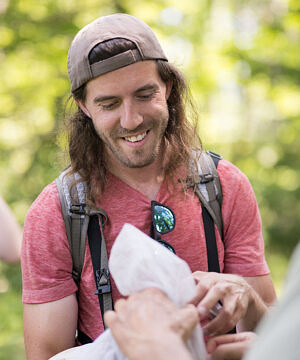
Nate (he/him) grew up in southeastern Massachusetts, where he dip-netted in local marshes and fished along the beaches. After his undergraduate studies at University of Massachusetts Amherst, he caught the birding bug, which cemented his passion for nature and desire to work in the environmental field. Nate is a current graduate student at Antioch University, with a focus in Environmental Studies: Conservation Biology. Coming from coastal Massachusetts, he has quickly fallen in love with the vast freshwater wetlands and spruce-lined hills of southern New Hampshire.
In addition to his work with the Harris Center, Nate helps run the Antioch Bird Club, is a rare plant surveyor for the Native Plant Trust, and is on the Board of Directors of the New England-based birding journal, Bird Observer.
Nate makes a conscious effort not to take for granted the everyday happenings in the natural world, and appreciates the mountainous backdrop of the area and a good sunrise or sunset. In his free time, he can be found kayaking around boggy areas looking for plants, birding the most obscure locations possible, or sitting by a random brook, appreciating the moment.


