I don’t need to tell you that we are living in an extraordinary time. Every day, new closures or
cancellations are announced, new cases of COVID-19 suspected or discovered. We are doing what
we must to care for ourselves and our community, but the prospect of isolation or, worse, illness
weighs heavy.
Like many of us, I prepared for the possibility of quarantine by stocking up on canned goods and
coffee at the co-op last week. Pushing my grocery cart through crowded aisles and past empty shelves,
I saw one weary, worried face after another. I got the sense that all of us, shoppers and cashiers alike,
were just trying to hold it together – and barely succeeding.
The Unfurling of Spring
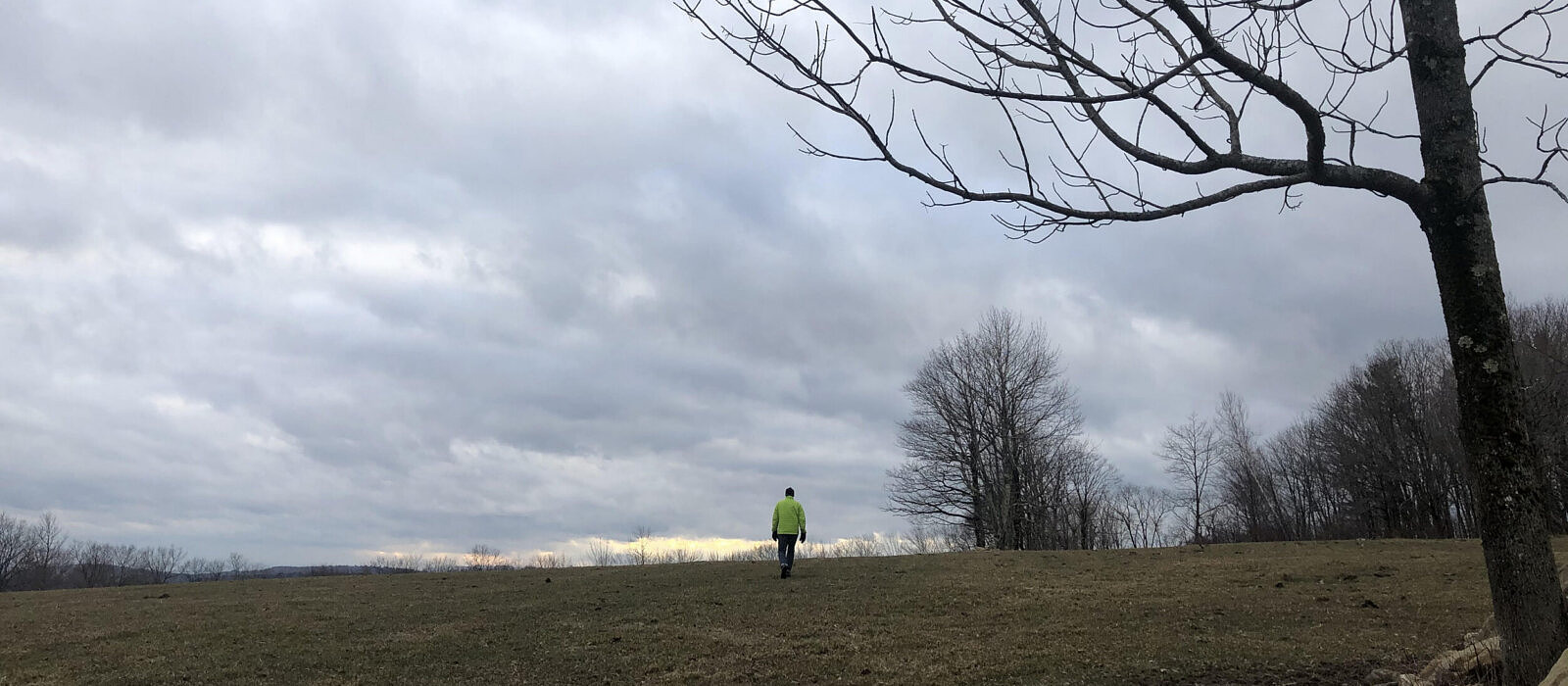
The other evening, desperate for a break from the anxiety and chaos and uncertainty, I went for a walk
after work. The first half-hour, my mind was swirling with questions and to-do lists and contingency
plans and niggling fears about whether I’d washed my hands often enough or long enough that day.
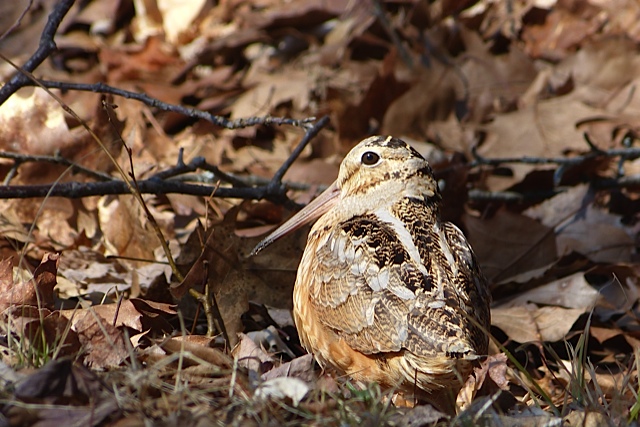
A woodcock standing on the ground, surrounded by fallen leaves.
(photo © Polly Pattison)
Then, I was drawn out of my dismal reverie by the peenting and twittering of two woodcocks, engaged
in competing courtship displays. I’d never seen or heard woodcocks so close to my home before, and it
stopped me in my tracks. Wild creatures, carrying on with their wild lives, oblivious to our human
dramas. The slow, grand unfurling of spring.
My friend Sam Jaffe – educator, photographer, and chief caterpillar wrangler for The Caterpillar Lab
in Marlborough – saw it too:
“As businesses close, the first red-winged blackbirds and eastern phoebes arrive to stake out nesting
territories. As the CDC makes its recommendations, the red maple buds swell and the first spring
caterpillars emerge to feed. As the toilet paper aisles sit empty at supermarkets, the great amphibian
migrations continue…. We are just around the corner from the first tent caterpillars hatching, from
dozens of species of moths at our lights, from viceroy butterfly caterpillars eating willow buds, from so
much life. Many programs and events may have been canceled, but spring is not canceled.”
Every day, new birds are returning. On rainy nights, spotted salamanders and wood frogs are moving
toward their breeding pools with great determination. In a few weeks, bloodroot and coltsfoot and
trout lilies will appear. Fiddleheads will uncoil. With or without us, the natural world is reawakening.
It comforts me to know that, even though our own daily rhythms have been deeply disrupted, nature’s
rhythms endure.
Now, more than ever, we need time in nature – what poet Wendell Berry called “the peace of wild
things.” “When despair for the world grows in me,” he wrote, “and I wake in the night at the least
sound in fear of what my life and my children’s lives may be, I go and lie down where the wood drake
rests in his beauty on the water, and the great heron feeds…. For a time, I rest in the grace of the world,
and am free.”
Outside is Open
Thankfully, being outside is perfectly in keeping with the principles of “social distancing,” as long as
you venture out solo or with other members of your household and keep several feet away from
anyone else you encounter on the trail.
So, sit in the garden and feel the warmth of the sun on your skin. Head to your nearest wetland after
dark and immerse yourself in the deafening roar of love-struck peepers. Listen for owls. Search for
spring wildflowers.
As ecologists and educators, we often talk of what people can do to sustain the natural world, but it’s
also important to remember how the natural world sustains us. It calms us, centers us, grounds us. It
provides essential respite from the frenzied fusillade that is the 24-hour news cycle.
We are exceptionally fortunate to live in a place with a strong commitment to land protection and to
ensuring that the public has access to this open space. Now is the perfect time to discover it all. You
could hike a different Monadnock Region trail every day until the need for self-isolation has passed,
and not repeat yourself once. Like many organizations, the Harris Center is canceling programs and
events for a while, but our trails and grounds remain open, and we hope you’ll use them.
Friends, if you can get outside during the days and weeks to come – whether to a Harris Center trail,
one of the many other wonderful conservation lands in our neck of the woods, or even just your own
backyard – do it. It helps.
This article was originally published in the Monadnock Ledger-Transcript on April 10, 2020.
Brett Amy Thelen

Brett (she/her) has been directing community science programming for more than twenty years. She has an MS in Environmental Studies: Conservation Biology from Antioch University New England and a BA in Literary & Cultural Studies from the College of William and Mary in Williamsburg, VA. Prior to and during her graduate studies, she held a variety of ecological research and environmental education roles with Cape Cod National Seashore.
In addition to her work with the Harris Center, Brett writes for Northern Woodlands and other publications.
In her free time, she can be found roaming the dunes and shores of outer Cape Cod, exploring the springtime desert, or walking the quieter corners of the SuperSanctuary. She lives in Harrisville with her husband, Russ, and their chirpy cat, Arthur.


