The SuperSanctuary is home to a fantastic array of organisms, and we’re using iNaturalist to document as many of them as possible. Here are the most fascinating finds from our “Biodiversity in the SuperSanctuary” iNaturalist project for 2025!
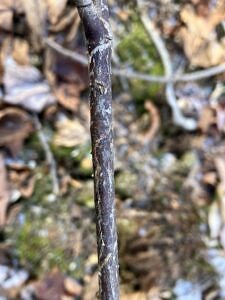
Click on the image to view this observation in iNaturalist. (photo © iNaturalist user @brownwaspmantidfly)
Leaf Blotch Miner Moths (Marmara viburnella)
December 20 2025 | West Side Trails
While winter is best known for animal tracking, it can also be a fantastic time of year to look for insect tracks and signs. Many insects, such as moths and wasps, create galls, mines, and other structures inside plant leaves, stems, and even flowers. The shape of the structure, where it is placed on a plant, and the plant species it’s growing on can help determine the insect that made it, and resources like Gallformers.org can help you identify the culprits.
In this instance, the cream-colored stripe on this Viburnum is actually a mine made by the caterpillar of the leaf blotch miner moth, Marmara viburnella. It was observed by @brownwaspmantidfly along our West Side Trails.
Fan Clubmoss (Diphasiastrum digitatum)
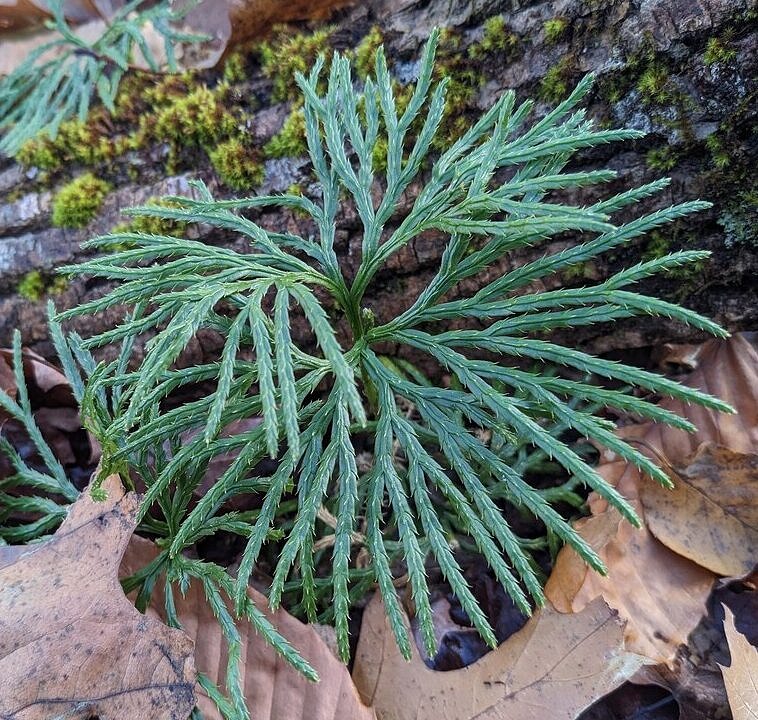
Click on the image to view this observation in iNaturalist.
(photo © iNaturalist user oreamnos_borealis)
November 8, 2025 | Kulish Ledges
Separate from true mosses, clubmosses are vascular plants more similar to ferns than to moss. They have a rich connection with humans throughout time; Native peoples used them as medicinal tea to treat digestive issues, and clubmoss spores combust easily and were used for flash photography in the 19th century. Fan clubmoss has also historically been collected for use in wreaths and other decorations. Overharvesting resulted in the decline of this slow-growing plant, but populations have fortunately rebounded, and this species is once again common in forests and along woodland edges. @oreamnos_borealis found these fan clubmosses along the Kulish Ledges Trail in Nelson.
Pickerel Frog (Lithobates palustris)
October 11, 2025 | Hiroshi Land
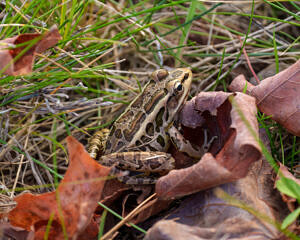
Click on the image to see this observation in iNaturalist.
(photo © Tom Momeyer)
October is about as late as it comes for seeing frogs, like this pickerel frog spotted by @tmomeyer on our Hiroshi Land. By the end of October, our local pickerel frogs will swim to the bottom of muddy ponds or streams to hibernate, which is called “brumation” for reptiles and amphibians. During brumation, their metabolism and heart rate slow significantly, and oxygen is absorbed through their skin instead of their lungs. Being cold-blooded, their body temperature will match that of the surrounding water, and they’ll remain mostly inactive while the water is cold. They’ll emerge from brumation once the water begins to warm in the spring.
Banded Tussock Moth (Halysidota tessellaris)
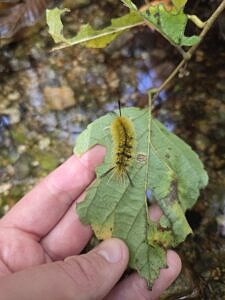
Click on the image to see this observation in iNaturalist. (photo © iNaturalist user remtomologist)
September 26, 2025 | East Side Trails
Have you noticed a lot of fuzzy caterpillars lately? That is no coincidence! While many caterpillars rely on camouflage or nocturnal activity to evade predators, banded tussock moths move about in plain sight thanks to their long, irritating hairs — which signal to predators that eating them would not be a particularly enjoyable experience. Some lucky humans do not react, but for others, coming into contact with one of these caterpillars produces an itchy red rash, so it’s best not to touch! The adult moths are a subtle, but beautiful cream color with pale brown bands; they similarly contain alkaloids that make them unpalatable to predators.
@remtomologist spotted this banded tussock moth caterpillar on our East Side Trails.
Nut and Acorn Weevils (Genus Curculio)
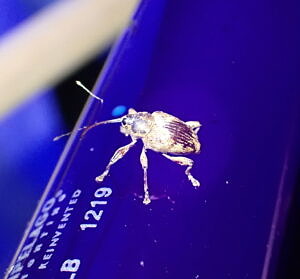
Click on the image to see this observation in iNaturalist. (photo © Steven Lamonde)
August 16, 2025 | Harris Center Headquarters
You never know what’s going to fly into your blacklight! @slamonde documented this nut and acorn weevil (Genus Curculio) during the Invertebrates by Blacklight program at the Harris Center on August 16. Have you ever seen an acorn on the ground that still has its cap? These are immature seeds discarded by the tree, and they are not viable — often due to these weevils, which lay their eggs inside young acorns. The larvae feed inside the nut protected by the hard shell, then bore a small hole that can be found on the shells of affected acorns.
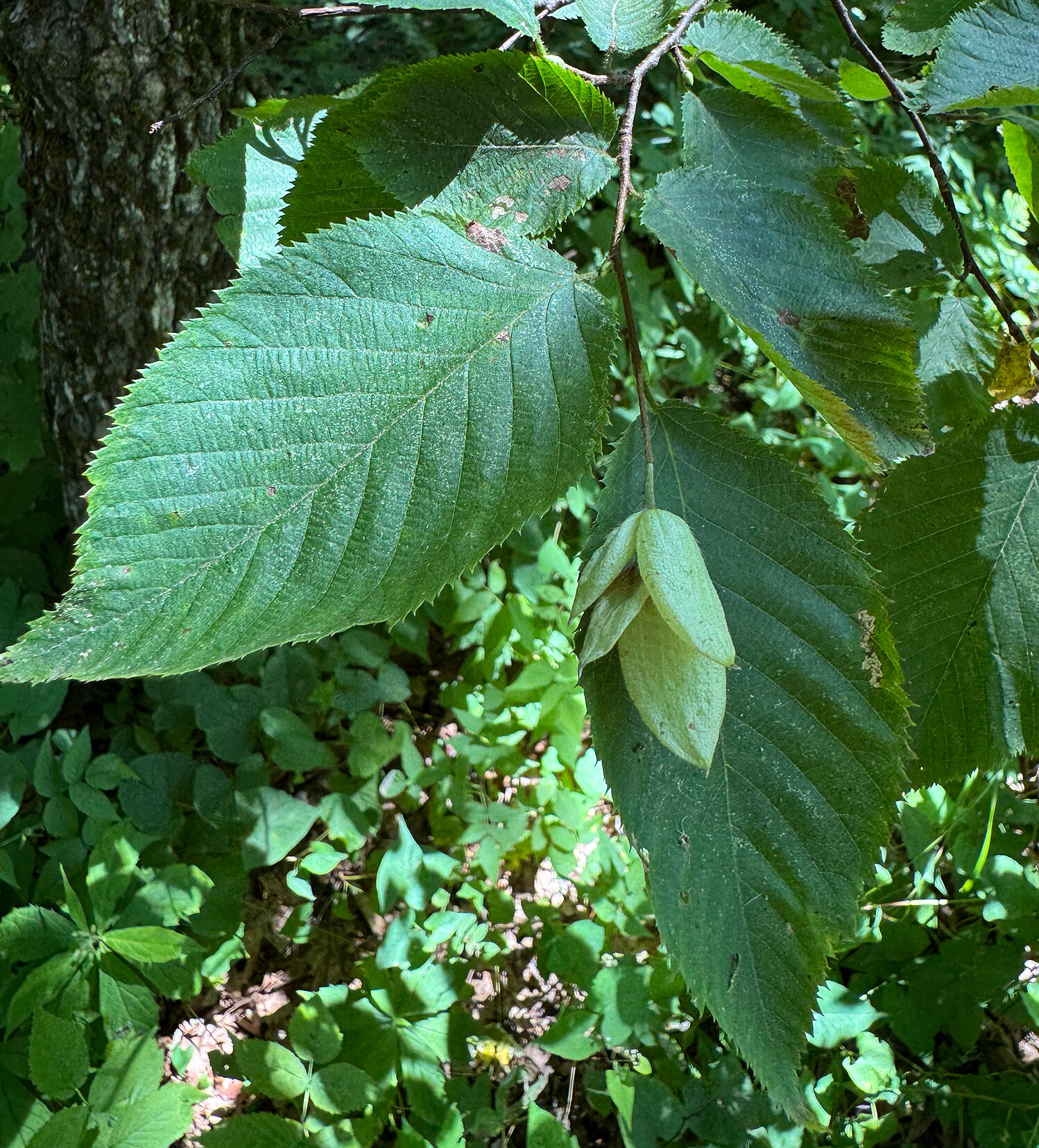
Click on the image to see this observation in iNaturalist. (photo © iNaturalist user mattdemmon)
American Hophornbeam (Ostrya virginiana)
July 23, 2025 | Kulish Ledges Trail
American hophornbeam, or ironwood, is an understory tree in the birch family often found on dry hillsides with at least slightly enriched soils. The common names for this species are well deserved: “hophornbeam” derived from the fact that the fruits (pictured) look like hops used for brewing beer, and “ironwood” because the wood is extremely dense, and was historically used for levers and tool handles.
@mattdemmon observed this plant on one of the south-facing hills along the Kulish Ledges Trail in Nelson.
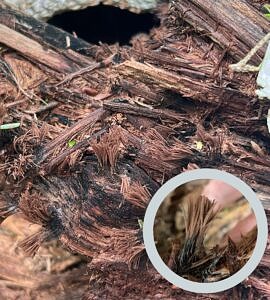
Click on the image to see this observation in iNaturalist. (photos © Katharine Dean & Nate Marchessault)
Chocolate Tube Slime (Genus Stemonitis)
June 29, 2025 | Jaquith Rail Trail
BioBlitzes are great opportunities to slow down and view nature through the lenses of other people. During our recent SuperSanctuary BioBlitz at the Jaquith Rail Trail, @katharine_dean snapped a photo of what looked like just a rotting log — but, upon closer inspection, the log was covered with chocolate tube slimes. These organisms are a type of slime mold, which vaguely resemble mushrooms and also reproduce from spores, but are in their own separate kingdom, more closely related to amoebas than fungi. Though slime molds have no brains, experiments have shown that they’re able to solve mazes. Researchers in Japan have even used slime molds to find the most efficient paths for train networks!
Globetails (Genus Sphaerophoria)
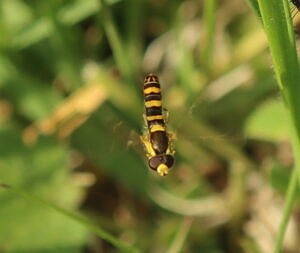
Click on the image to see this observation in iNaturalist — including several additional photos.
(photo © Steven Lamonde)
May 13, 2025 | Harris Center Headquarters
Globetails are charismatic little wasp mimics named for the large, globular reproductive organs at the tips of their abdomens. These important pollinators are a type of hoverfly, capable of flying completely still as they scan their surroundings. Several species will also land on humans to collect salt from our sweat! Though they resemble wasps — and will even pretend to sting when provoked — they are completely harmless. Some species are extremely short-lived, completing an entire life cycle from egg to reproduction in just over two weeks. As a result, they can produce half a dozen generations (or more!) per season. @slamonde spotted this colorful globetail hovering in the Harris Center meadow.
Threeleaf Goldthread (Coptis trifolia)
Click on the image to see this observation in iNaturalist.
(photo © Brett Amy Thelen)
April 30, 2025 | Hiroshi Land
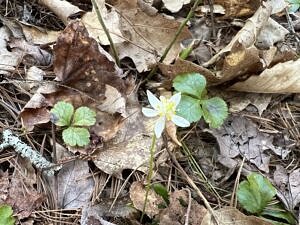
Threeleaf goldthread is a diminutive plant shrouded in beauty for those who take the time to examine it up close. Its leathery, three-part leaves persist throughout the year, providing greenery on the forest floor when most other plants are dormant. Connecting these leaves are vibrant yellow underground stems that are used by Indigenous peoples to treat stomach conditions. The flowers that bloom in early spring appear to have a number of large white petals; these are, in fact, sepals, with the true petals being small, yellow, and club-shaped. @brett-amy-thelen spotted this plant blooming along the trail at our Hiroshi Land.
Click on the image to see this observation in iNaturalist. (photo © Nate Marchessault)
Eastern Bluebird (Sialia sialis)
March 10, 2025 | Harris Center Headquarters
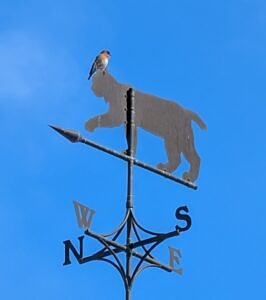
The beloved Eastern Bluebird is a bird of open areas like meadows, fields, and, if we’re lucky, our own backyards. They tend to perch conspicuously, not just so we enjoy their beauty, but also so they can visually search for food. When foraging, bluebirds will often engage in a behavior called “sallying,” in which they fly off to grab a prey item and return to the same perch afterward.
@natemarchessault spotted this Eastern Bluebird on top of the weathervane right here at the Harris Center. Nate missed his first chance at a photograph, but thankfully the bird sallied back for another opportunity.
North American River Otter (Lontra candensis)
Click on the image to see this observation in iNaturalist.
(photo © Brett Amy Thelen)
February 8, 2025 | West Side Trails
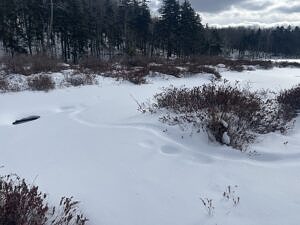
While many other furbearers go dormant, winter is a time of year when river otters thrive. The slides they make on the snow even suggest they have fun in the cold weather, although this is also an efficient means of travel. Despite the frigid temperatures, they mostly hunt underwater for fish, mollusks, and crayfish, maintaining holes in the ice in order to access the water. While underwater, their double coats and extremely dense fur keep their bodies warm and dry. @brett-amy-thelen spotted this river otter slide and access hole near our West Side Trails.
Click on the image to see this observation in iNaturalist. (photo © Nate Marchessault)
Birch Budgall Mite (Eriophyes betulae)
January 27, 2025 | Hiroshi Land
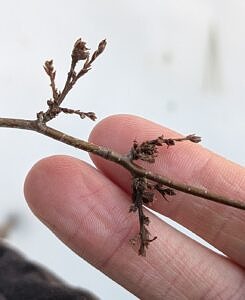
Winter is a great time for appreciating the form and figure of woody plants, without any deciduous leaves to obscure your view! While walking in the woods, you may have noticed small, feathery growths on birch stems that resemble a witch’s broom or miniature mistletoe.
These are galls caused by Eriophyes betulae, also known as the birch budgall mite. While the mites cause this abnormal growth, they do no damage to the tree. @natemarchessault spotted these galls along our Hiroshi Loop Trail.
Contact Us
For more information about using iNaturalist in the SuperSanctuary, please contact our staff ecologist Nate Marchessault at (603) 525-3394 or by email.


