Let Your Lawn Be
Don’t judge me, please. You will notice that my front and back lawns have gone long and wild this month. My usually tidy yard is a tangled oasis of dandelions, purple violets, white violets, and bluets. The grass is unruly. It looks as though I’ve forgotten to care.
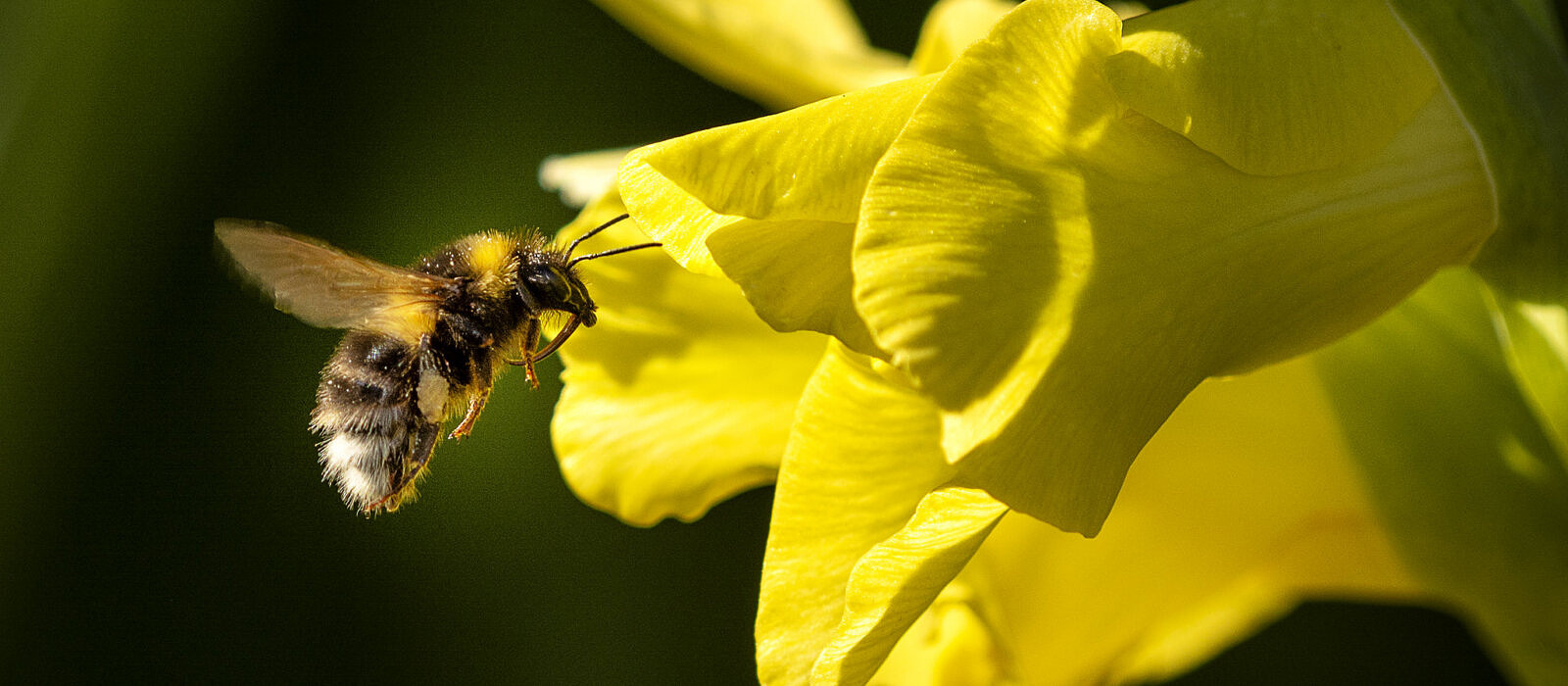
But it is precisely because I care that my lawn has gone feral. I care about bumblebees, azure butterflies, carpenter bees, dogbane beetles, Eastern ringlets, orchard bees, and many other wild local pollinators.
Welcome to the end of No Mow May, when we have permission to take a break from mowing and give these invertebrates a place to forage for food, find shelter, make nests, lay eggs, seek refuge, and perform an essential ecosystem service – pollination!
No Mow May began in 2019. Plantlife, a United Kingdom environmental nonprofit dedicated to protecting and preserving plant and fungi life, started the movement. Their goal isn’t messy lawns. Rather, the goal is to “Free the wildflowers in your lawn, so they can grow wild and provide a feast for pollinators, tackle pollution, and lock away atmospheric carbon below ground.”
Not mowing in May isn’t about the grass. Instead, it is all about wildflowers. Violets, fleabane, dandelions, clover, creeping thyme, daisies, and other early blooms provide native pollinators with early season nectar and pollen when most flowering plants are yet not out. These first spring flowers provide much-needed sustenance to a whole suite of insects, who will then pollinate our region’s plants and trees later in the season.
If not mowing is a hard sell for you, consider juicy fall apples, sweet New Hampshire peaches, or pumpkins on your front porch. A month of not mowing seems like a fair trade, plus, it is a great excuse to be lazy.
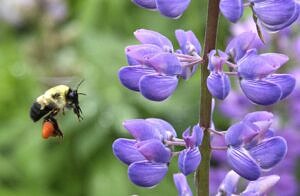
A bumblebee pollinates a lupine. (photo © Francie von Mertens)
Across the United States, the No Mow May movement is taking root. Last year, over 25 cities participated by letting their parks, town commons, and highway edges go untrimmed while encouraging homeowners to stash their mowers away for the month. For some states to the south of New Hampshire, it might be No Mow April, and farther north, No Mow June. It all depends on the best time to protect the early spring flowers. Researchers have shown that urban landscapes that have participated in No Mow May in Britain have a tenfold increase in native bee populations.
Maybe increasing the insect population around your house isn’t that appealing to you. But remember, it is all connected. Let it grow, and they will come! Not just bumble bees and butterflies, but birds and mammals and so much more. And yes, there will be some things that show up that you might not want, like ticks. To control the tick population, mow a few wide walking pathways for you and your family while letting most of your lawn grow.
Do You Really Need a Lawn that Looks Like a Fairway?
Our culture is obsessed with golf course-style lawns. In 2020, Americans spent $105 million attempting to achieve perfect lawns. But maybe it is time to rethink this fixation in light of native pollinators facing catastrophic global declines. In the United States alone, a 2016 study shows that our native pollinators have declined by over 20 percent. Many factors are contributing to this decline, including loss of habitat, pesticide use, urbanization, drought and disease, all exacerbated by climate change.
Our lawns ask a lot of us. We mow, water, apply pesticides, and mow more. A lush green lawn decorates the front of our home, but in the end, what we’ve created is a grass desert. This monoculture comes with a price that includes overuse of our water resources, loss of wildflower habitat, and the poisoning of our own yard through the use of pesticides. Pesticides don’t just poison the animals we don’t want; they can impact animals all the way up the food chain. Remember DDT? It is naïve to think it isn’t, in fact, poisoning us as well.
Let’s change how we look at our front and back yards. Instead of a desert of grass, let’s liberate our lawns and see them as the mini-meadows they could be when we let the wildflowers grow. Let’s invite the bumble bees, solitary bees, and butterflies to the feast. Let’s celebrate the biodiversity we can cultivate instead of pouring resources and chemicals into creating a monoculture of grass.
And at the end of May, when you wheel out your mower, consider only mowing every few weeks. So what if your lawn doesn’t look like a golf course? Instead, think of it as a wildlife refuge. Change your perspective and take joy in the purple vetch, ox-eye daisies, hawkweed, and black-eyed Susans.
These are not weeds. They are a welcome refuge for our imperiled pollinators.
This story was originally published in the Monadnock Ledger-Transcript on May 25, 2023.
Susie Spikol
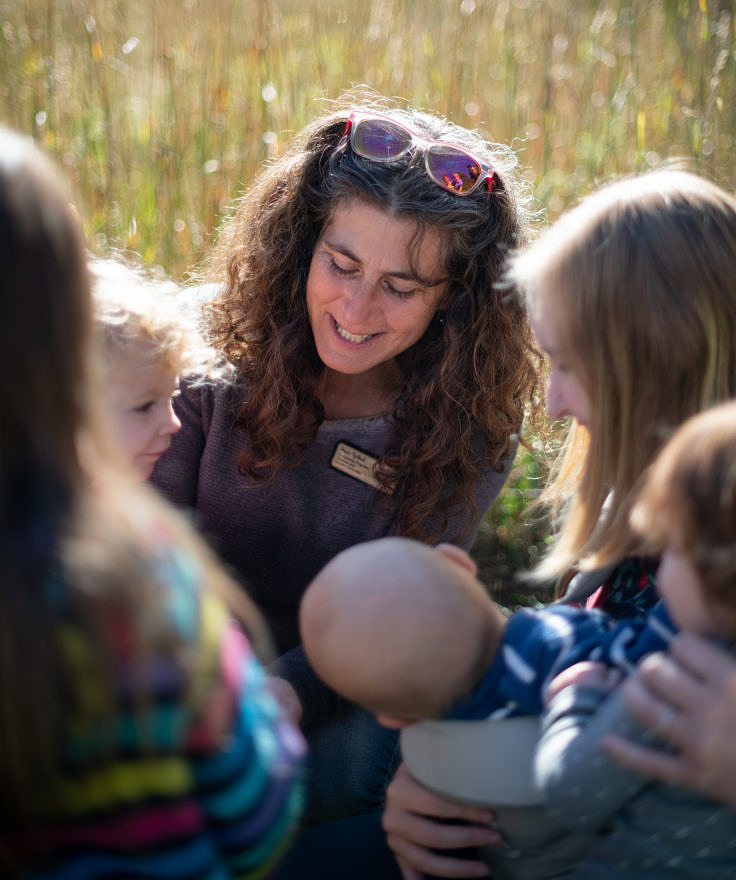
Susie Spikol has spent her life exploring the intersection of nature and story. Growing up in Brooklyn, she searched for fairies and gnomes, enchanted by fireflies and snails — an early love of nature that shaped her 30-year career as a naturalist and educator. She has inspired thousands through hands-on programs and public talks, earning numerous awards for her work.
A regular contributor to Yankee, Northern Woodlands, and Taproot Magazine, she also writes the “Backyard Nature” column for the Monadnock Ledger-Transcript.
Her first book, published in 2022, The Animal Adventurer’s Guide: How to Prowl for Owls, Make Snail Slime, and Catch a Frog Bare-Handed, was recognized with a National Parenting Products Award. Her second book, published in 2025, Forest Magic for Kids: How to Find for Fairies, Make a Secret Fort, and Cook Up an Elfin Picnic is filled with activities inspired by imagination, folklore, and science and an invitation to all readers to step outside and discover the beauty and magic of the world. Her latest book, also published in 2025, The Book of Fairies, takes inspiration from nature, folklore, and her own wild imagination in writing this newest guide to woodland magic


