The SuperSanctuary is home to thousands of species, and we’re using iNaturalist to document as many of them as possible. Here are some of the most intriguing finds from our “Biodiversity in the SuperSanctuary” iNaturalist project for 2026!
Dogwood Sawfly (Macremphytus testaceus)
October 6, 2026 | Harris Center Headquarters
Click on the image to view this observation in iNaturalist. (photo © George Caughey)
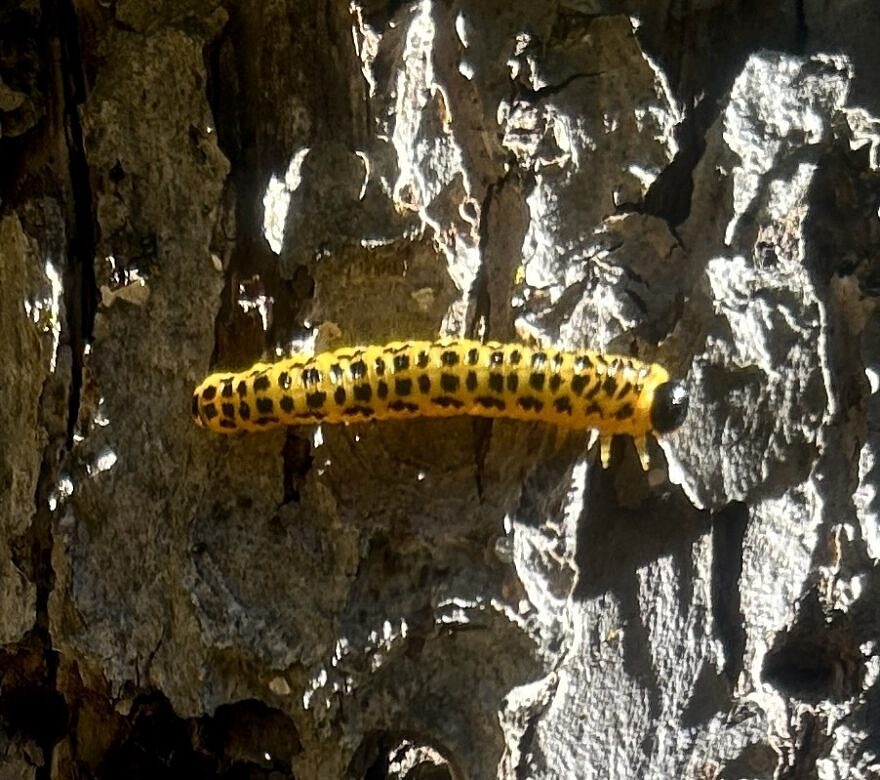
Sawfly larvae are often overlooked, as most people assume that they’re butterfly and moth caterpillars. Despite the striking resemblance, sawflies are more closely related to ants, bees, and wasps than to moths, and the adults are similar to small wasps in appearance. Macremphytus testaceus is a species of sawfly that feeds on dogwood leaves. Even as larvae, this species undergoes a dramatic transformation: early instars have a powdery white coating, while later instars are a striking yellow-orange with black spots (pictured). This species spends the winter in this caterpillar-like larval stage, constructing an overwintering chamber in decaying wood.
@gcaughey found this individual on the Harris Center grounds, where large numbers of sawflies can be seen feeding on our dogwoods each year.
Click on the image to view this observation in iNaturalist. (photo © iNaturalist user jjorgie)
Yellow Nodding Ladies’ Tresses
(Spiranthes ochroleuca)
September 12, 2026 | Partridge Woods
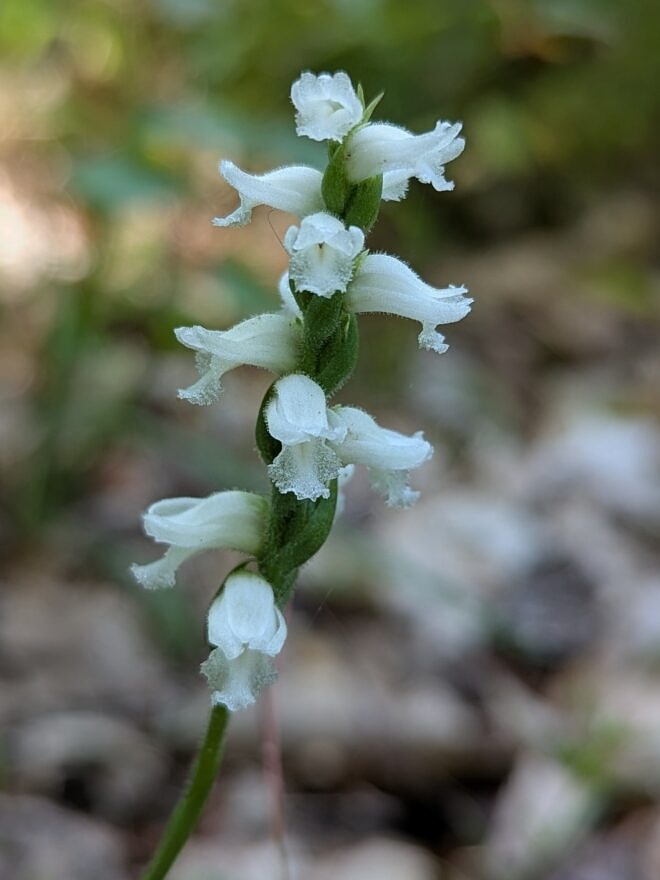
It may be late in the growing season, but some orchids are still in bloom! Yellow nodding ladies’ tresses are diminutive orchids that have a short season, from late August to early October.
Bumble bees can frequently be seen visiting the flowers, where they crawl between the petals — pollinating as they go. In addition to pollination by insects, yellow nodding ladies’ tresses are also capable of agamospermy, which is the process of producing viable seeds without pollination. Because this is an asexual form of reproduction, the resulting plants are genetically identical to their parents.
@jjorgie found this individual on the Partridge Woods lands in Nelson.
Insect Destroyer Fungus (Order Entomophthorales)
August 15, 2026 | Partridge Woods
Click on the image to see this observation in iNaturalist. (photo © Kate McKay)
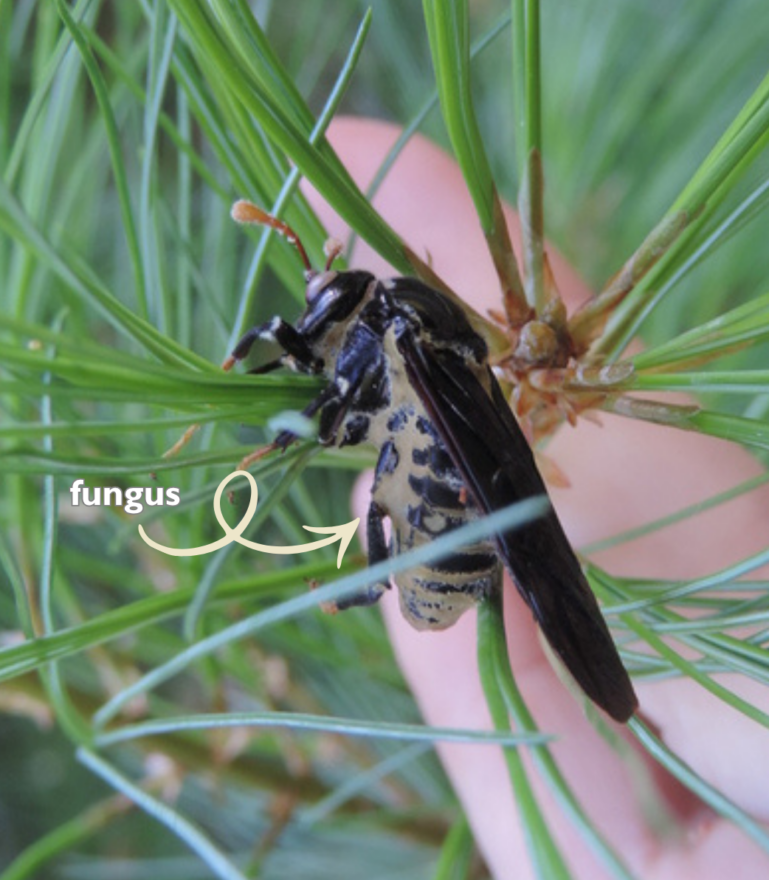
Did you know there are fungi out there capable of mind control? Insect-destroying fungi can take control of their hosts, manipulating zombified insects and causing them to climb to elevated locations, where they become affixed to leaves, pine needles, or blades of grass. From there, the fungi forcibly shoot spores into the air, which helps them reach new hosts and continue the infection cycle. Some species can repeat this process many times throughout a single growing season, while others produce thick-walled resting spores that help them survive harsh winter conditions.
@twelvespottedskimmer found this sci-fi fungus during our Mini BioBlitz at Partridge Woods, where community scientists identified more than 200 species of plants, animals, and fungi in just three hours!
Click on the image to see this observation in iNaturalist. (photo © Nate Marchessault)
Thin-leaved Sedge (Carex cephaloidea)
July 7, 2026 | Harris Center Headquarters
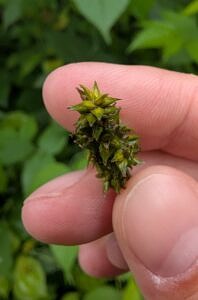
Sometimes rare species can be hiding right under your nose! Though somewhat unassuming, thin-leaved sedge is ranked as “S2,” or Threatened, in the state of New Hampshire, meaning that there are fewer than 20 known populations statewide. The scarcity of this species is likely due to its affinity for calcium-rich deciduous woodlands, which are relatively uncommon in the Granite State. This is not only the first known occurrence of this species in Hancock, but also the first record of any Threatened or Endangered plant species in Hancock.
@slamonde discovered this sedge near the meadow behind the Harris Center building, and @natemarchessault counted at least six plants during a return visit.
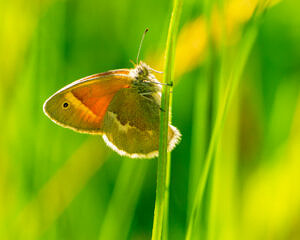
Common Ringlet (Coenonympha california)
June 24, 2026 | Hiroshi Land
Click on the image to view this observation in iNaturalist.
(photo © Tom Momeyer)
The common ringlet is appropriately named for our region, where it is a common inhabitant of meadows and other clearings. The orange forewings, each marked with a dark “ring,” are distinctive for this species, as is their bouncy flight style. Ringlets fly low over grasses to commute between nectar plants or, if they’re female, to find places to oviposit eggs; male ringlets also often fly around meadows in search of females. @tmomeyer spotted this individual in the field at our Hiroshi Land.
If you’d like to learn more about local butterflies, join us to scout for common ringlets – and many other species – during our annual SuperSanctuary Butterfly Count on July 18!
Spring Salamander (Gyrinophilus porphyriticus)
May 22, 2026 | Old Dublin Road to Eaton Road Rail Trail
Click on the image to view this observation in iNaturalist.
(photo © Benjamin Labier)
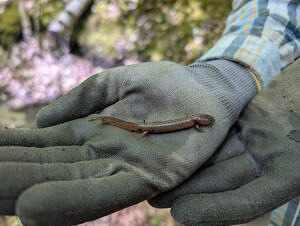
Spring salamanders are one of New Hampshire’s most impressive amphibians. The state’s largest salamander species, adults can grow to more than 9 inches long and are often bright red or orange in color. Younger individuals (like the one seen here) are usually more cryptic, with grayish coloration that may show hints of red. Despite their size, spring salamanders can be surprisingly difficult to find, as they spend much of their time hiding beneath rocks and other debris in the cold, rocky brooks and streams they call home. But don’t let their secretive nature fool you — spring salamanders are voracious predators that feed on crayfish, small brook trout, and even other salamanders!
Our summer conservation interns found this individual while doing trail maintenance along our Old Dublin Road to Eaton Road Rail Trail, where @boaboaca captured this great photo for iNaturalist.
Turkey Vulture (Cathartes aura)
April 12, 2026 | Hiroshi Land
Click on the image to view this observation in iNaturalist.
(photo © Tom Momeyer)
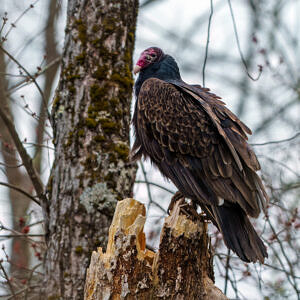
Beautiful in their own way, Turkey Vultures get their name from their bald heads, which resemble those of Wild Turkeys. Turkey Vultures eat almost exclusively carrion — dead stuff — and are one of only a few bird species to have a strong sense of smell, which they can use to find their next meal from over a mile away. In addition to eating dead things, they’re also well known for regurgitating food at predators to startle them and for urinating on themselves to cool off.
While not the most glamorous, Turkey Vultures fill an important ecological role by minimizing the spread of pathogens and removing decomposing organisms from the environment. They are Nature’s Cleanup Crew! @tmomeyer photographed this striking individual on our Hiroshi Land.
Pine Tube Moth (Argyrotaenia pinatubana)
March 11, 2026 | Partridge Woods
Click on the image to view this observation in iNaturalist.
(photo © Steven Lamonde)
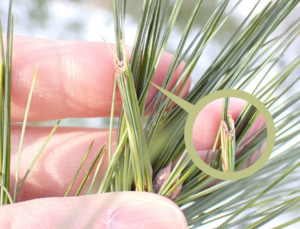
Once you know what to look for, pine tube moths are pretty easy to spot! This species uses fine silk to stitch pine needles together into tubes, which they use for two purposes. As caterpillars, the tubes serve as cover while they eat the inner portions of the stitched needles. Each caterpillar will create several tubes for feeding; then, when they’re ready to pupate, they’ll create a new tube, which protects them not only from predators but also from the elements as they overwinter. To find this species, look for needles with chewed tips, most often on Eastern white pine. @slamonde discovered this individual at Partridge Woods in Nelson.
Bald Eagle (Haliaeetus leucocephalus)
February 28, 2026 | Harris Center Headquarters
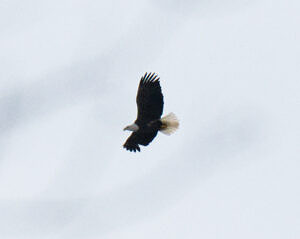
Click on the image to view this observation in iNaturalist.
(photo © Luis Agosto)
The Bald Eagle is both a national symbol and one of New Hampshire’s greatest conservation success stories. In the 1940s, the widespread use of the insecticide DDT caused Bald Eagle populations to plummet; for decades, no eagles hatched in the Granite State. Thanks to protections under the Endangered Species Act of 1973 and extensive conservation efforts by state and federal agencies and partner organizations like NH Audubon, the first New Hampshire eagle chick in the post-DDT era hatched in 1989, and Granite State eagle populations slowly but steadily recovered. By 2023, New Hampshire had become home to more than 100 breeding pairs. The species was reclassified from Endangered to Threatened in New Hampshire in 2008, and removed from the state’s Endangered Species List entirely in 2017.
Eagles begin nesting as early as February in New Hampshire, so keep an eye out for resident breeding birds! @lma82 spotted this individual flying over the Harris Center on the last day of February, which is often a quiet month for iNaturalist observations in our neck of the woods.
Downy Rattlesnake Plaintain (Goodyera pubescens)
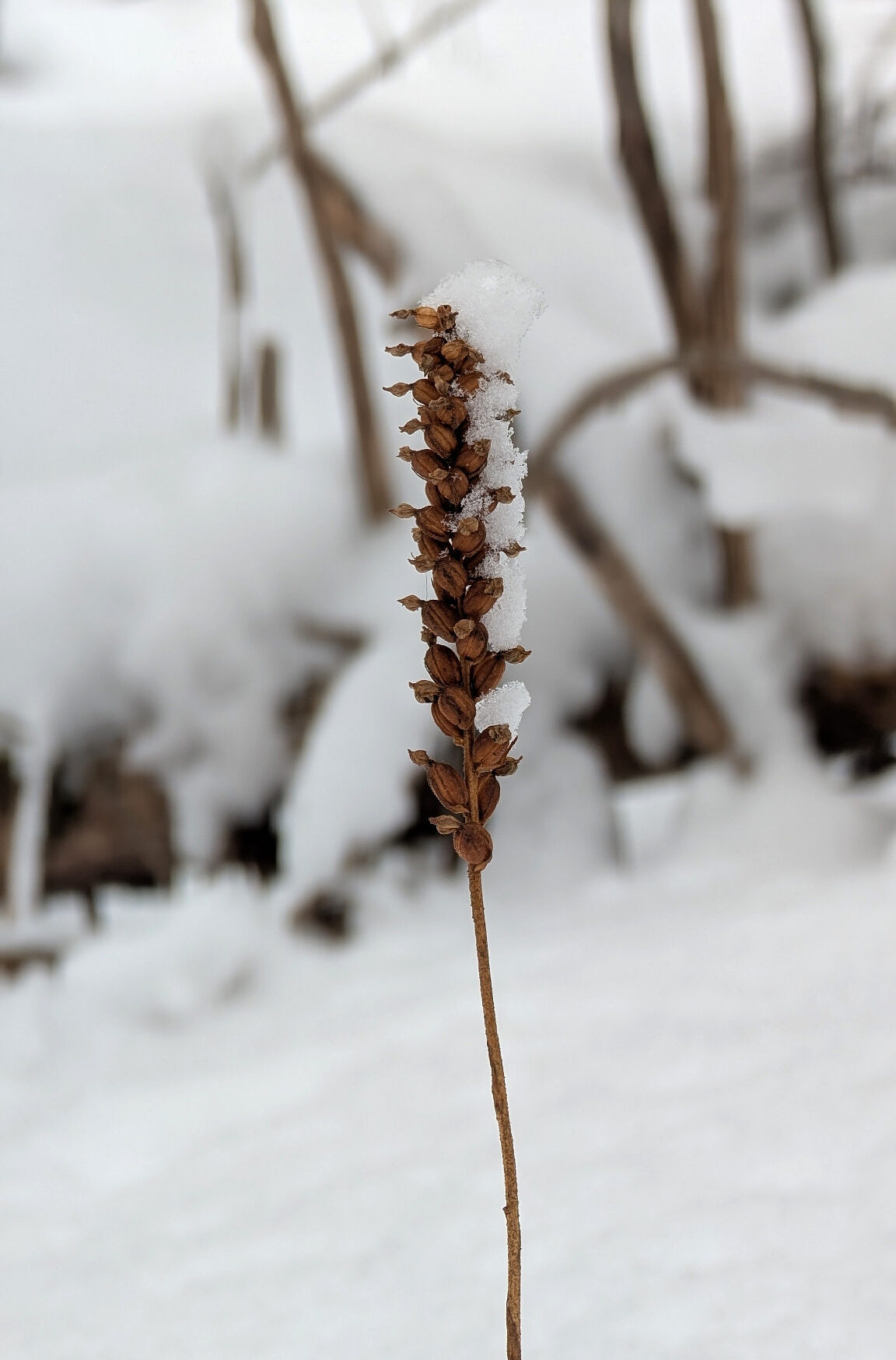
Click on the image to view this observation in iNaturalist. (photo © Nate Marchessault)
January 18, 2026 | West Side Trails
Most people don’t think of January as the month to search for orchids, but you can still find a few species if you know what to look for!
Even with several inches of snow on the ground, the flower stalk of downy rattlesnake plantain, containing seed pods from anywhere between 30-60 diminutive flowers, sticks out like a sore thumb. The plaintain-shaped leaves of this species are evergreen, and you can find them by digging beneath the snow; look for their contrasting, rattlesnake-like pattern.
Though small in size, this orchid is a long-lived perennial that takes anywhere from 4 to 8 years to bloom. After flowering, the mother plant dies and produces daughter plants from underground stems to take her place. @natemarchessault found this plant along our West Side Trails.
Contact Us
For more information about using iNaturalist in the SuperSanctuary, please contact our staff ecologist Nate Marchessault at (603) 525-3394 or by email.


