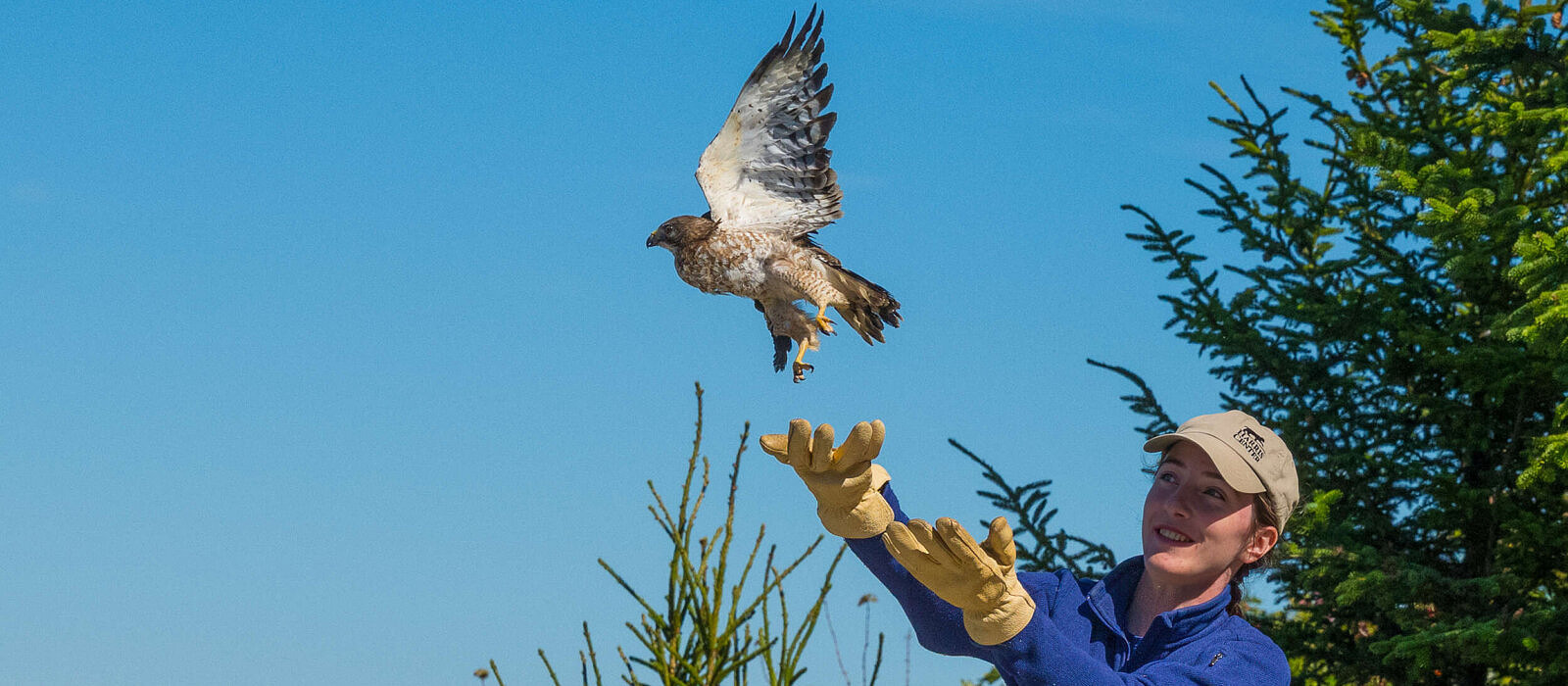
Turning Leaves Signal the Start of Hawkwatching Season
As the leaves change color and the days get shorter, hawks are preparing for their flight down south. The Pack Monadnock Raptor Observatory is widely renowned as one of the premier hawkwatching locations in New England. The view from the summit is enough to necessitate a visit: Mount Monadnock can be seen to the west, Boston’s skyline is visible to the southeast, and even Mount Washington can be spotted to the north on clear days.
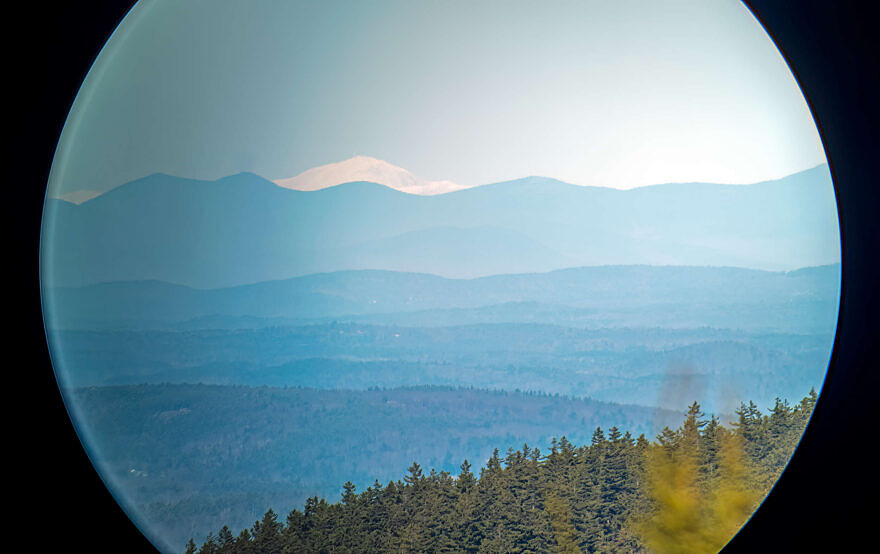
In the right conditions, Mount Washington, which is 100 miles away from the Observatory, can be seen through a spotting scope. (photo © Tom Momeyer)
Best of all, hawk migration is also visible from the summit. Fall hawkwatching is one of those experiences you’ll never forget. You might see a Merlin zipping by low right over the treetops, a kettle of Broad-winged Hawks soaring high overhead, or a Golden Eagle gliding into view from the distant horizon. A kettle, the term used to describe a group of birds riding together on an air thermal, is often the main attraction of hawk watches, but there are many other highlights. Hawk watchers regularly record up to fifteen different raptor species at Pack each season.
If you want to see the most raptors, visit Pack during the middle of September, as that is the peak of Broad-winged Hawk migration. Broad-winged Hawks are by far the most numerous raptor recorded from Pack, with thousands counted every season — sometimes thousands in a single day! September also sees good numbers of Sharp-shinned Hawks, American Kestrels, and Cooper’s Hawks. The relatively warm weather of September is also the best time to see migrating Monarch butterflies and dragonflies.
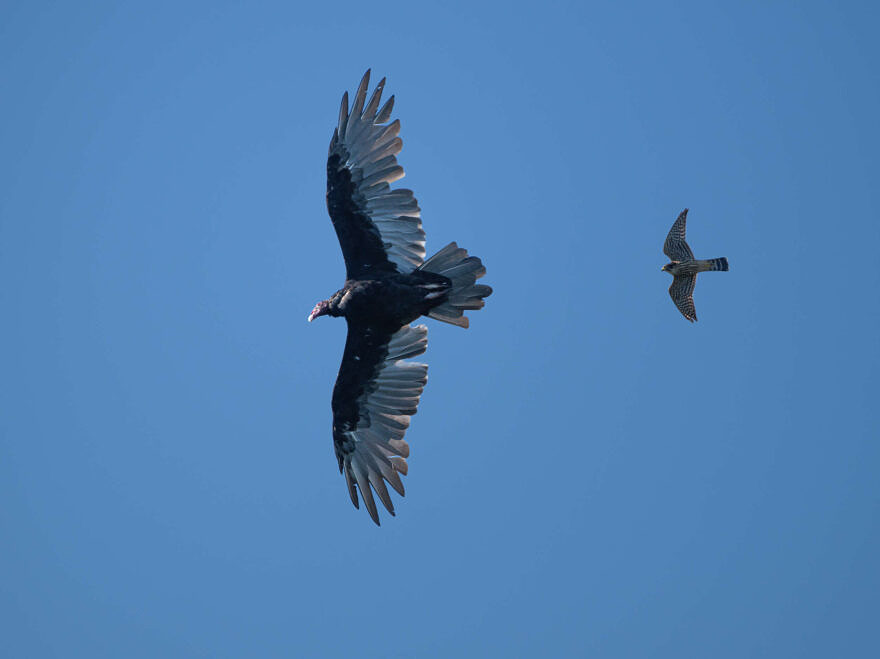
A Merlin chasing a Turkey Vulture over Pack Monadnock during migration season (photo © Chuck Carlson)
October brings cooler weather and sometimes foggy days atop the mountain. Although overall numbers of raptors are down, the diversity of raptor species is high. The chance for sighting uncommon migrants, such as Golden Eagles and American Goshawks, increases while steady numbers of Sharp-shinned Hawks and other regular species continue.
Windy, cold, and sometimes snowy, the month of November sees flights of Red-tailed Hawks and Red-shouldered Hawks, two opportunistic species whose movements are triggered by a decrease in food availability caused by the colder weather. The possibility for winter finch sightings increases in November too, including Evening Grosbeaks, Red Crossbills, White-winged Crossbills, and Pine Grosbeaks.
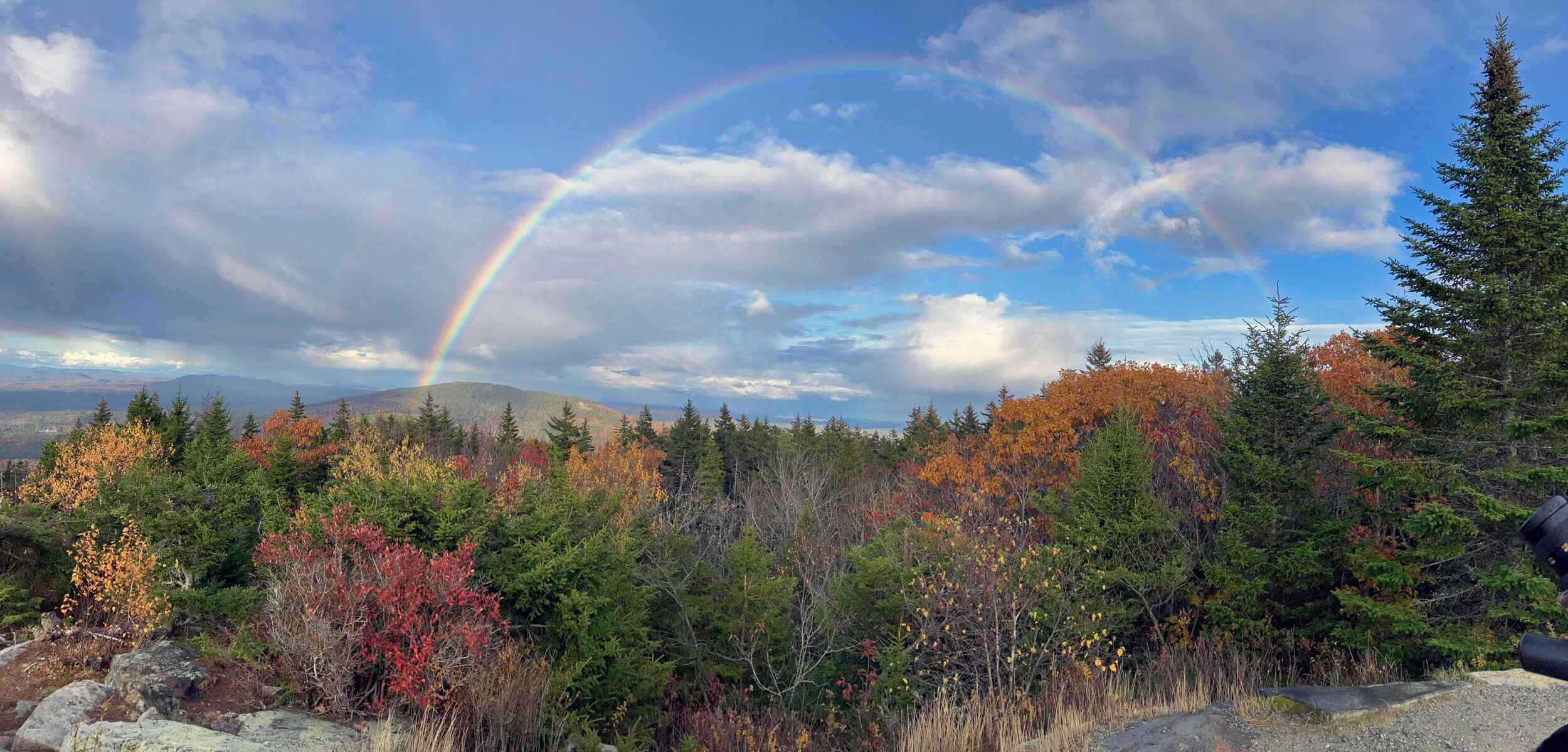
Kate captured this striking autumn rainbow over North Pack while counting hawks at the Observatory. (photo © Kate McKay)
A Day in the Life of an Official Hawkwatcher
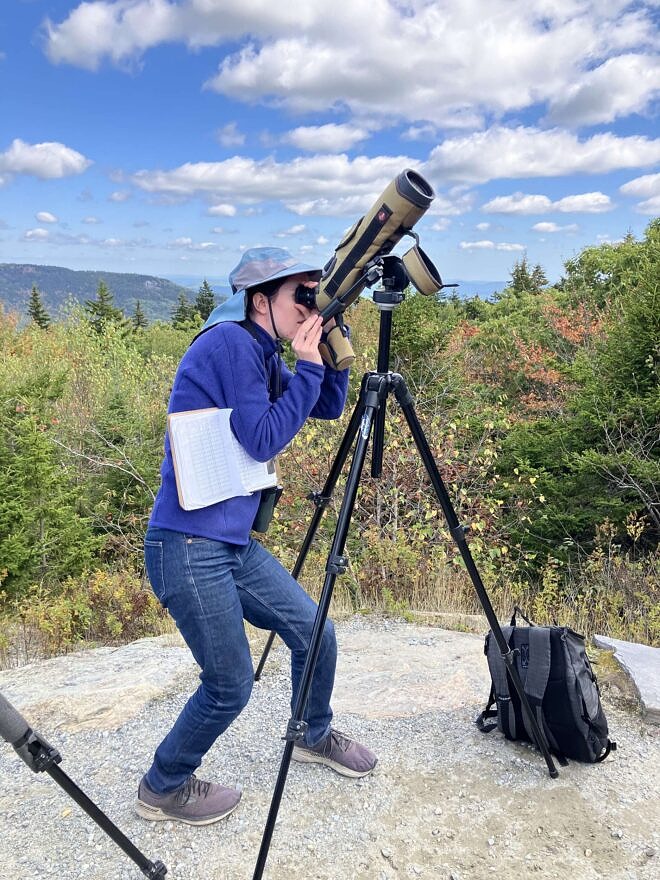
Kate McKay looks through the scope at the Observatory.
(photo © Phil Brown)
As one of the official hawk counters at Pack, I get to spend multiple days hawkwatching each week. There is something special about being in the same spot over the course of a few months. Autumn unfolds in stages, with distinct phases such as “early mid-fall,” because you notice more of the subtle changes that occur within a single season. When your eye isn’t to the sky, you can watch the gradual color change in the valley below as autumn progresses. You also discover the first signs of winter up on the mountain before they reach the lower elevations, such as the first snowflakes falling as late-lingering raptors continue their journeys.
The best hawkwatching days are days with northwest winds after the passage of a cold front, but (excluding heavy rain or fog) hawkwatching can be rewarding in any weather. You might see a group of restless hawks appearing over the hills under a rainbow after an afternoon drizzle passes through. When you’re standing at the Observatory on a cold day, with the wind blowing and your toes growing numb from standing still for hours, and an American Goshawk suddenly flies by in front of you, it’s the best feeling.
As a naturalist, I also enjoy the fact that you’ll not only see hawks at Pack, but plenty of other life too. Fall warblers hop among the conifer branches first thing in the morning as we set up for the day. Flocks of Canada Geese and other waterbirds stream by high overhead later in the season. Overall, we record about a hundred different bird species throughout the season. We also count the Monarch butterflies and migratory dragonflies that drift past the summit, often appearing in our binocular view as we scan for raptors. The resident chipmunks and rabbits, as well as interesting species of caterpillars and spiders, make regular appearances.
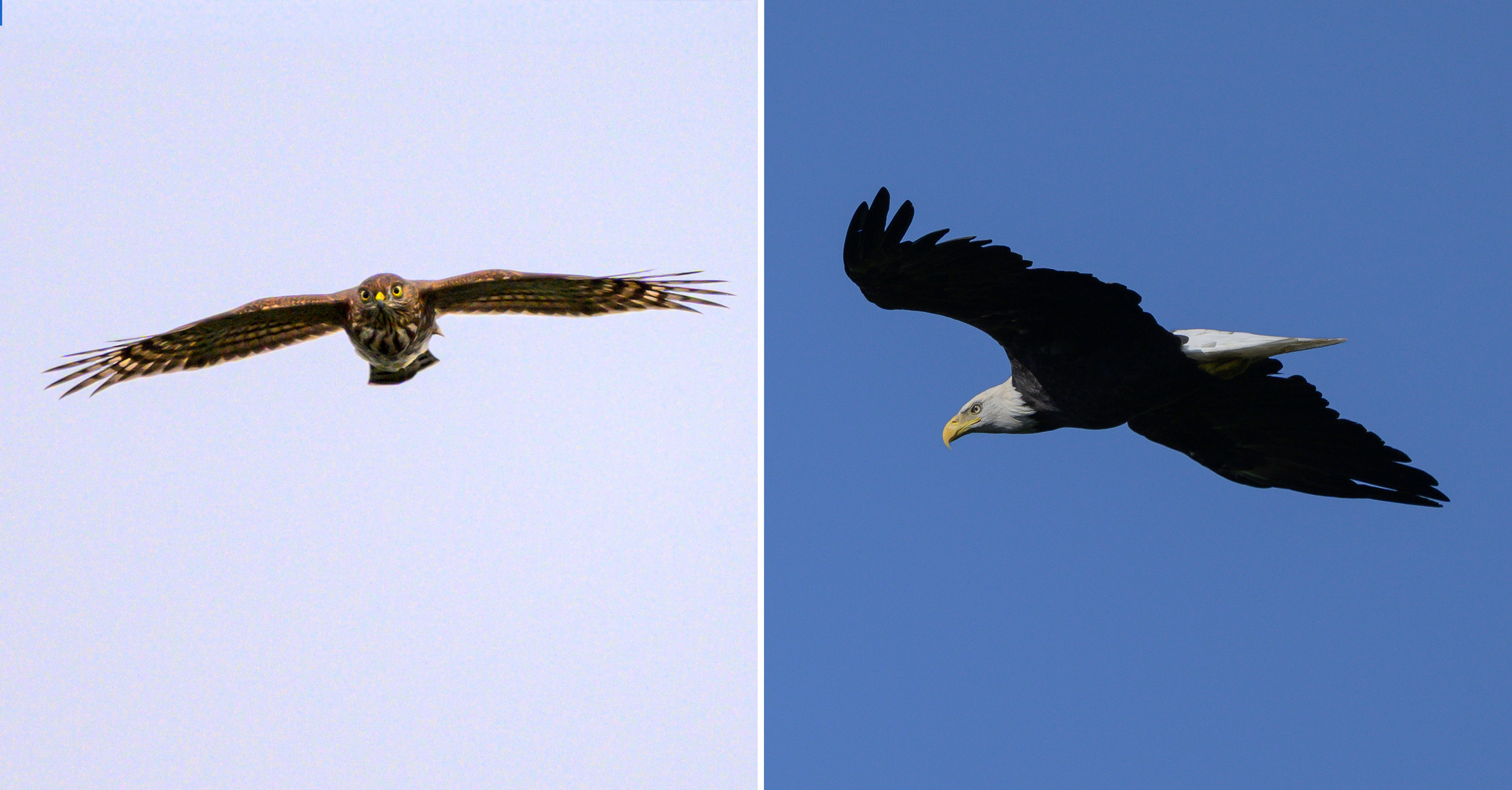
A Sharp-shinned Hawk (left) and Bald Eagle (right) soaring over Pack Monadnock in September 2026. (photos © Chuck Carlson)
Why We Count & How to Join Us
The Pack Monadnock Raptor Observatory was officially founded in 2005, although hawkwatching data from the mountain had been collected periodically since the mid-1970s. Data gets submitted to the Hawk Migration Association, and can be viewed on their website. Not only can you look up the daily summaries, forecasts, and season tallies at Pack, but you can also explore data from over 80 other hawkwatching sites along the East Coast. The numbers are used for research purposes and estimating raptor population trends. Larger patterns become evident over the years, such as the expansion of Black Vultures in our area and the overall decline in raptor numbers.
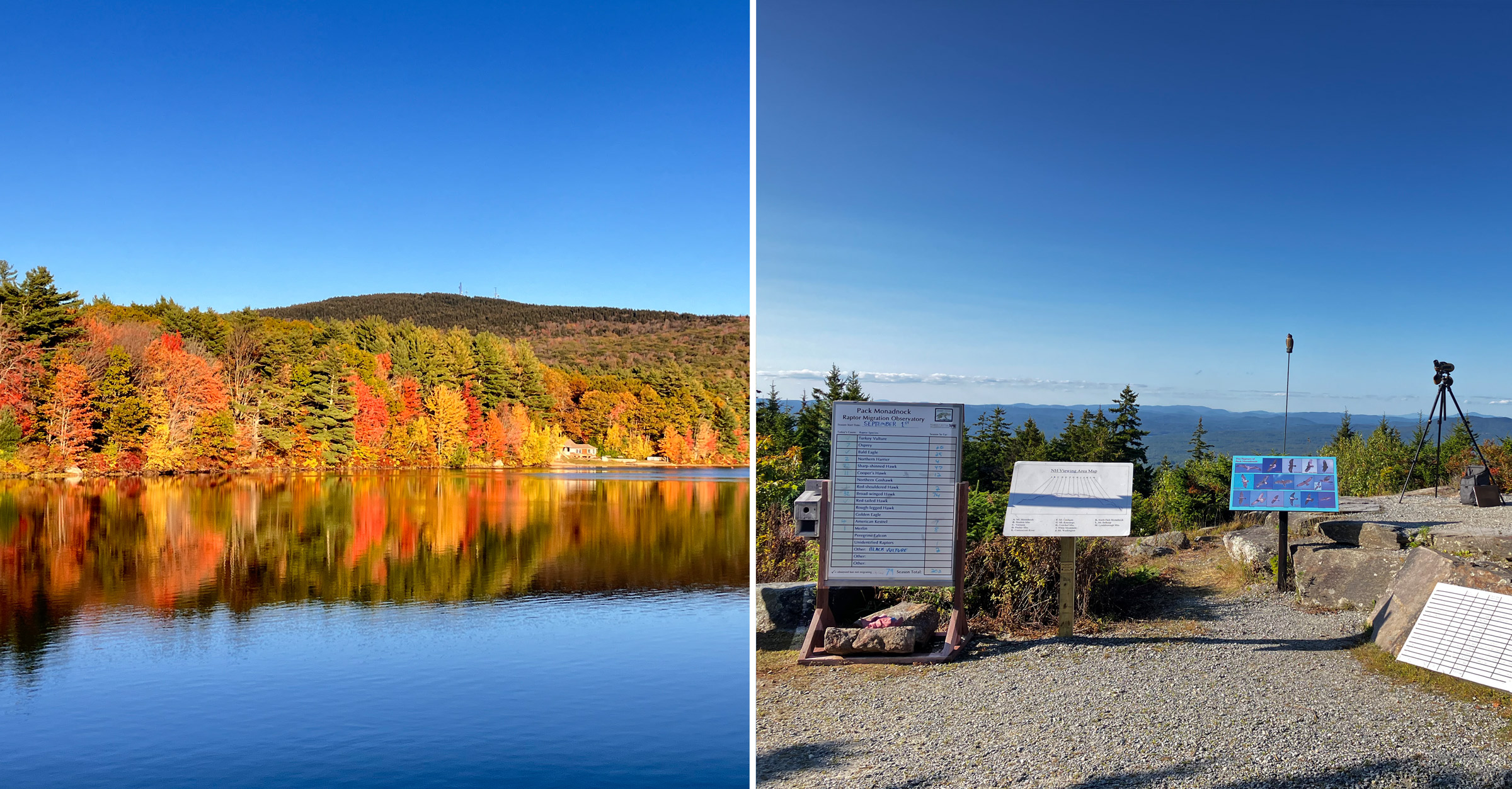
An autumn view of the Observatory from Cunningham Pond (left) and the peak of Pack Monadnock showing some of the equipment used by Hawk Watch staff and volunteers (right). (photos © Kate McKay)
At Pack, Harris Center staff and volunteers love to share their knowledge about raptors, and we are always happy to help visitors with raptor identification. From experienced local birders to visiting tourists discovering birds for the first time, anybody can enjoy hawkwatching. It doesn’t take much to get started: simply being curious and having patience makes for a good hawkwatcher.
Pack’s hawkwatching season runs from September 1 to November 20. Online reservations through Miller State Park’s website are strongly recommended, especially if you plan on driving to the summit, but visitors also have the option to park below and hike up one of the several short trails to the top. I hope to see you up there!
Kate McKay

Kate McKay (she/her) is a birder and naturalist from upstate New York. Her lifelong love of nature inspired her to study environmental biology and applied ecology at Cornell University, as well as to pursue a career in conservation. Kate has conducted field studies for many nature organizations in the Northeast, including surveying whip-poor-wills for the Vermont Center for Ecostudies, documenting amphibian road crossings for the New York State Department of Environmental Conservation, and conducting songbird surveys for the National Park Service. In her free time, she enjoys hiking, drawing, and photography.
We first hired Kate as an easement monitoring intern in the summer of 2024. She loved it so much that she returned for a second summer of easement monitoring in 2025, as well as taking on an additional role as our 2025 Forestry & Wildlife Intern. In the fall of 2025, she was hired to work as our Raptor Biologist at the Pack Monadnock Raptor Observatory, which regularly records more than 10,000 fall-migrating raptors each year. You can read her article “Diary of an Easement Monitoring Intern,” which documents her experience working for the Harris Center in writing and photographs, here.


