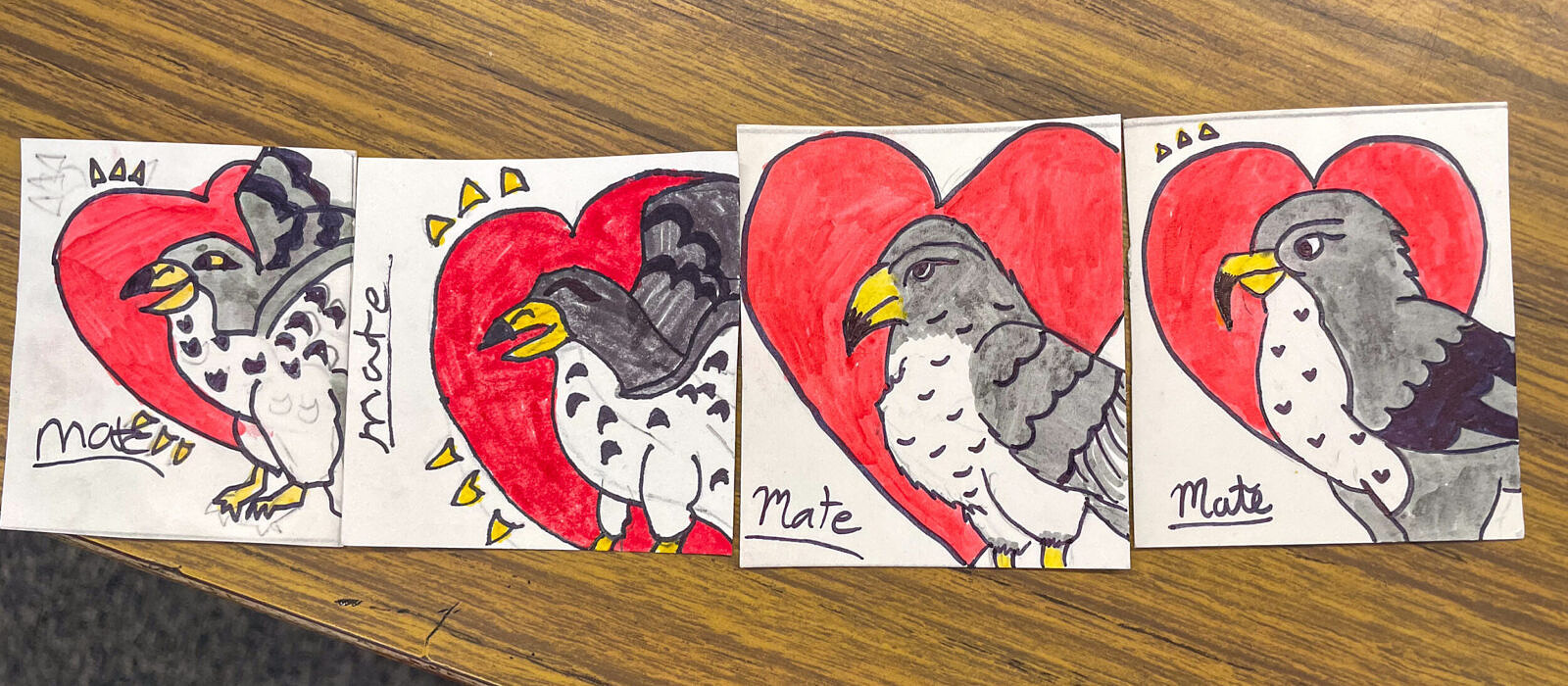
Beyond the Textbook
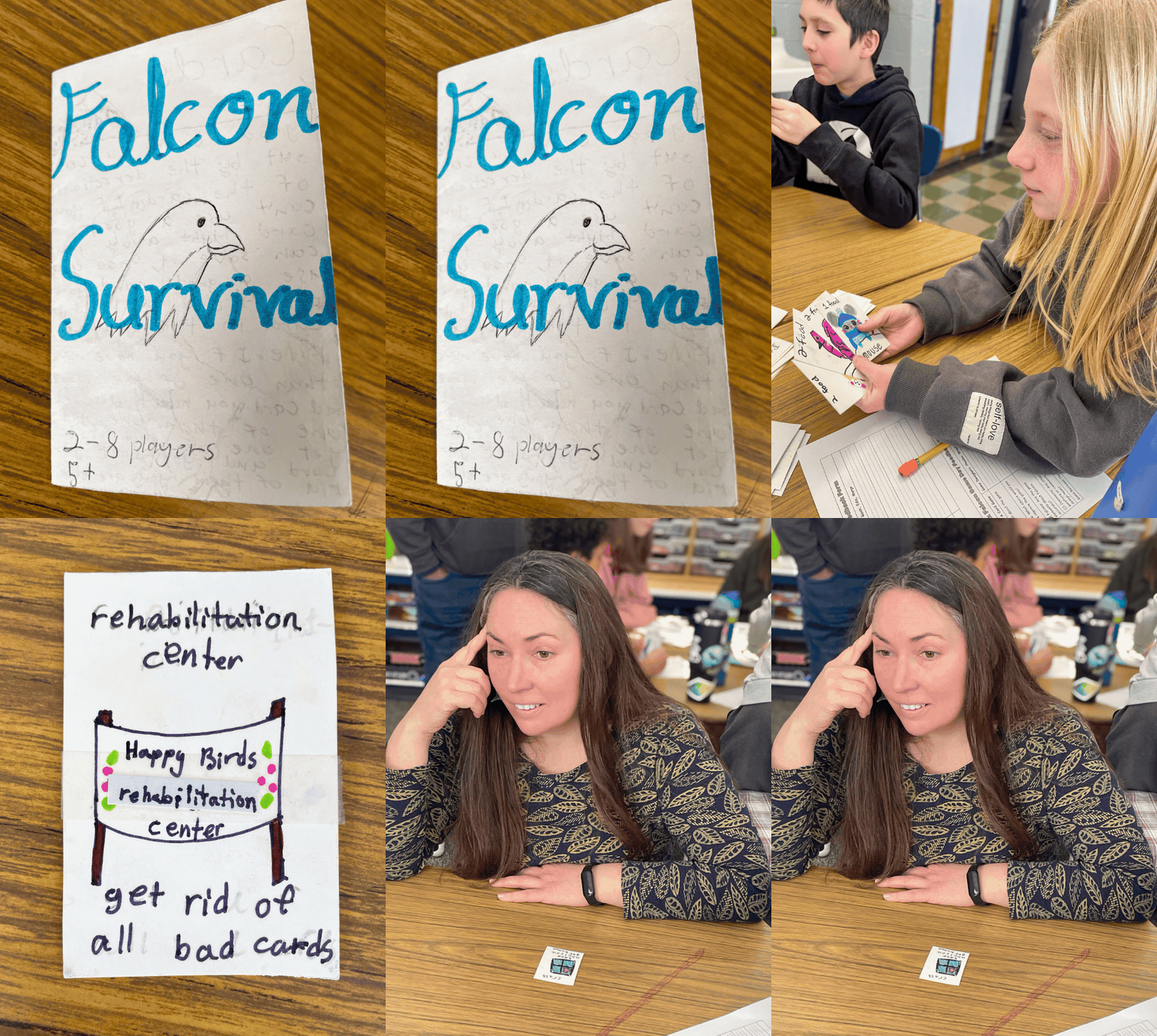
Working with their classroom teacher, Amanda Barnard, students designed games that explored the challenges a non-migrating Peregrine Falcon might face during a New Hampshire winter. (photos © Jenna Spear)
Play is increasingly recognized as a powerful pathway to deeper learning. When students are given opportunities to explore, imagine, and problem-solve in hands-on ways — especially outdoors — they build not only academic understanding, but also confidence, collaboration skills, and a lasting connection to the natural world.
This winter, 5th and 6th graders at Wells Memorial School in Harrisville put these ideas into action as they studied their school mascot, the Peregrine Falcon, with Harris Center teacher-naturalist Jenna Spear. Students learned what makes this remarkable raptor unique, from its lightning-fast hunting dives to the physical adaptations that help it survive in a wide range of environments. Along the way, they discovered that not all Peregrine Falcons migrate to Central or South America each winter. Migration patterns vary widely, depending on local food availability and how well individual birds are adapted to cold temperatures.
Working with their classroom teacher, Amanda Barnard, students then took their learning a step further by designing games that explored the challenges a non-migrating Peregrine might face during a New Hampshire winter. In small groups, they created four different games — including two card games, a board game, and a movement-based activity — all centered on the struggle to find enough food and avoid hazards such as frigid weather and window strikes in order to survive until spring.
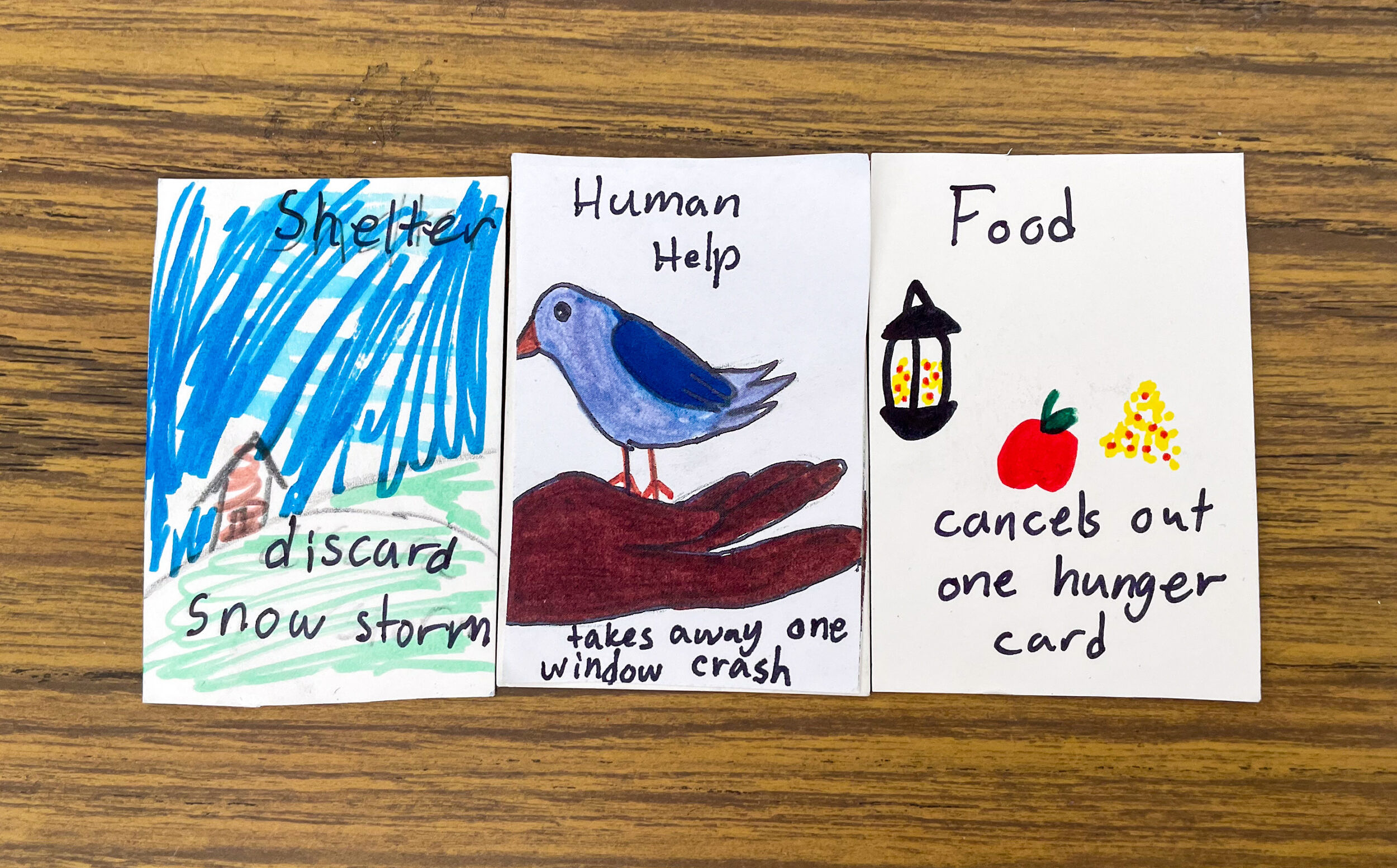
Some of the game cards designed by the 5th and 6th graders at Wells Memorial School (photo © Jenna Spear)
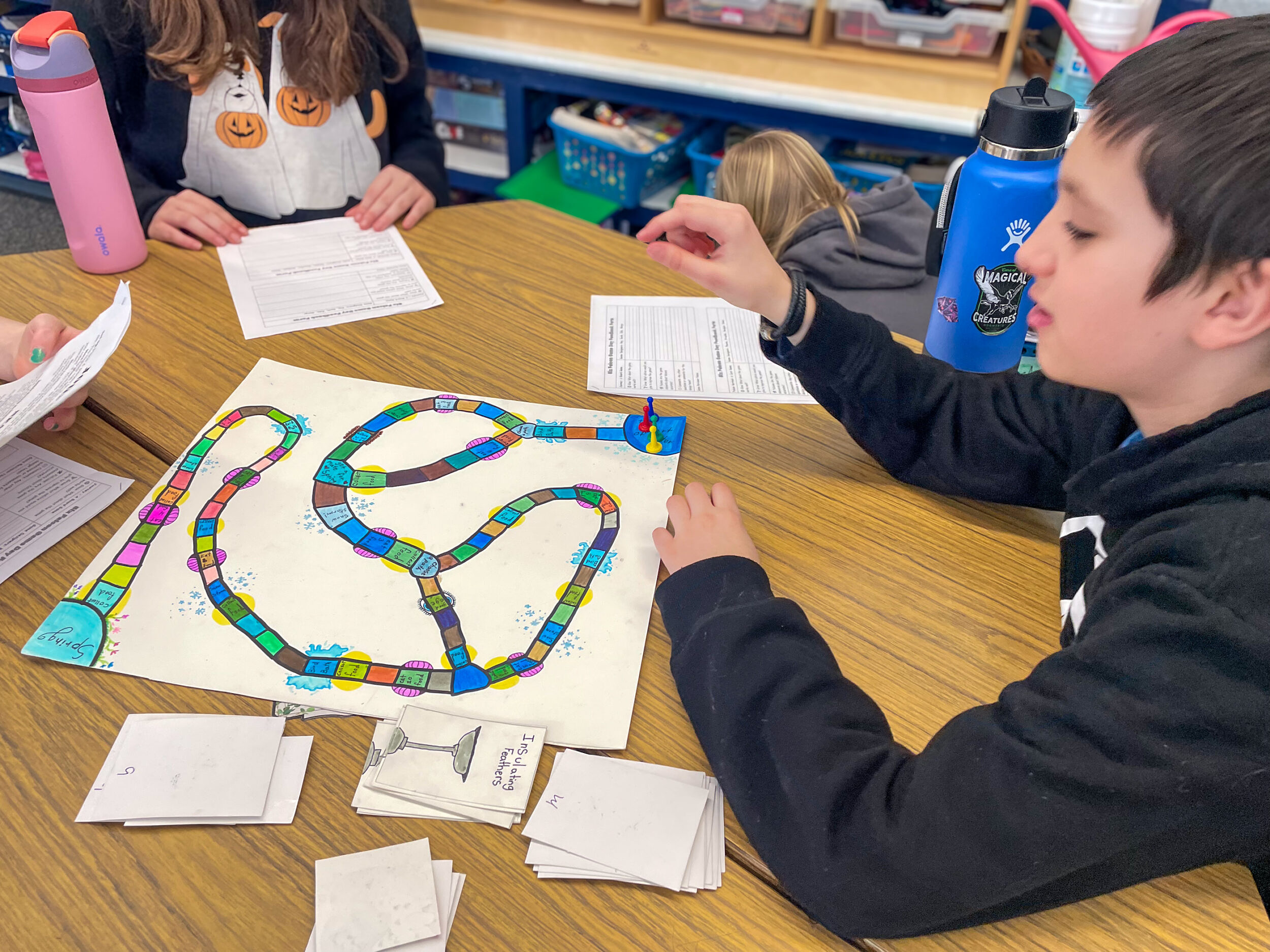
Students playing the Peregrine Falcon board game they created together (photo © Jenna Spear)
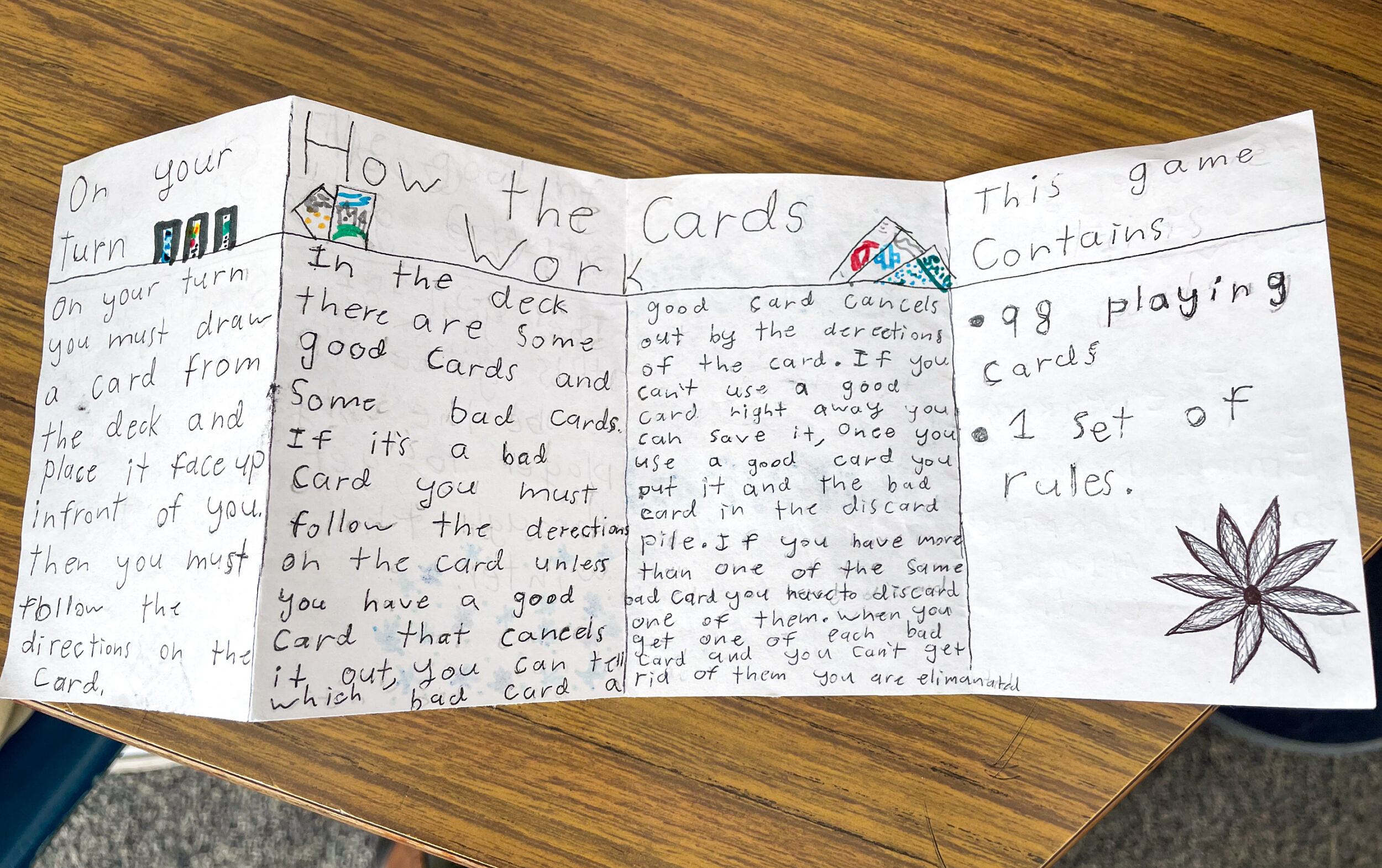
The students designed all components of the Peregrine Falcon games — the boards, instructions, cards, etc. — based on the raptor lessons taught by teacher-naturalist Jenna Spear. (photo © Jenna Spear)
Place-Based Learning in Action
Experiences like this reflect the Harris Center’s longstanding commitment to place-based, nature-focused education. Each year, Harris Center teacher-naturalists reach more than 3,000 students through repeat visits to over 170 classrooms in 35 Monadnock Region schools, connecting science learning to the landscapes and wildlife beyond their school doors. Research shows that play-based, outdoor education can improve engagement, strengthen critical thinking, and support social-emotional development — outcomes that are clearly visible when young people are given the chance to learn through curiosity, creativity, and real-world exploration.
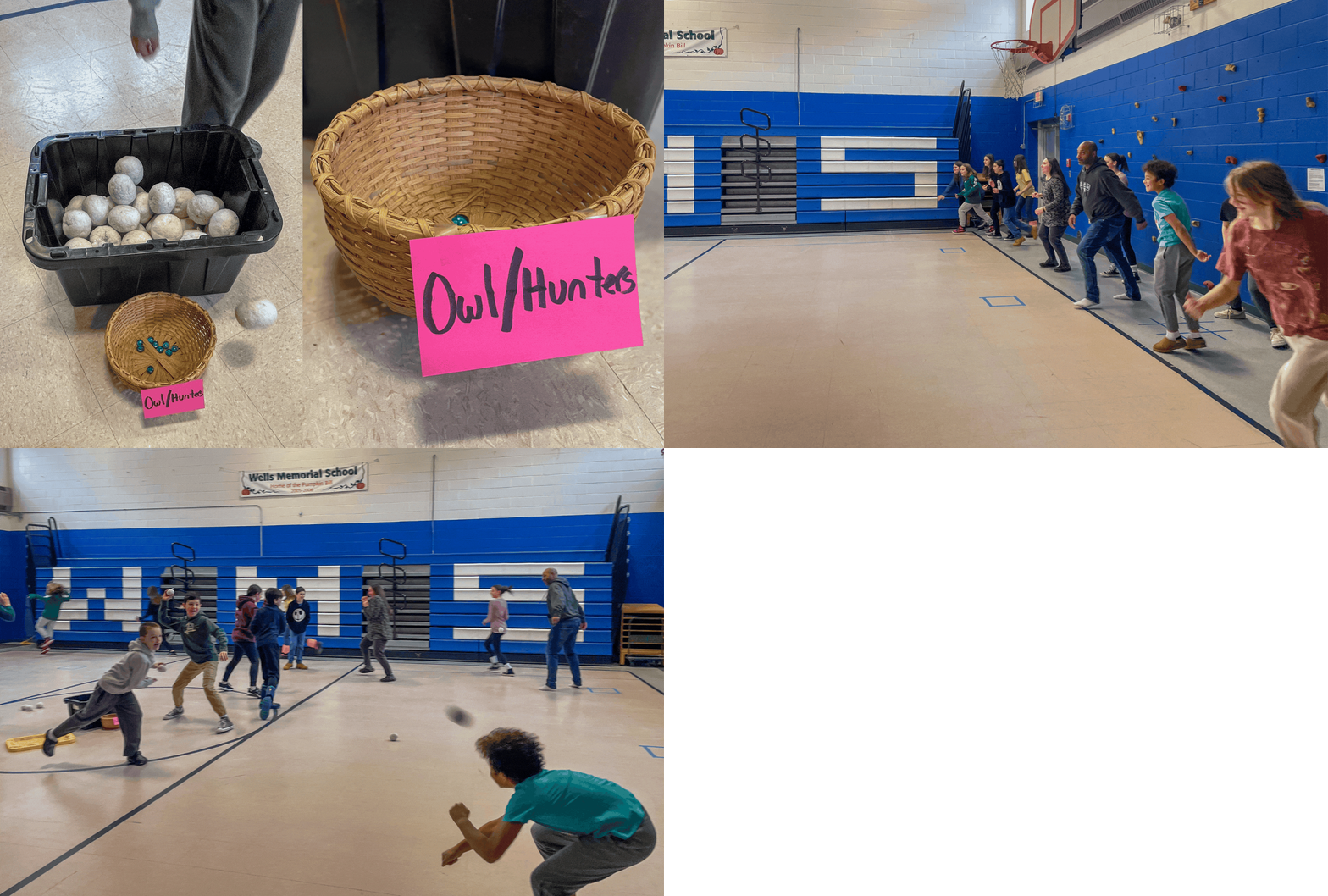
Students playing Falcon Survival 2.0, a movement-based game they created inspired by the Peregrine Falcon’s struggle to survive until spring (photo © Jenna Spear)

Your Gift Makes a Difference
Thanks to our incredible community of supporters, the Harris Center continues to protect wild places, educate people of all ages, and conduct vital conservation research. Your generosity makes everything we do possible — from preserving habitat for bobcats and birds to inspiring the next generation of environmental stewards.
We invite you to make a gift today to help sustain this important work. On behalf of the turtles, trees, wildflowers, salamanders, and butterflies — and the people who cherish them and our wild places — thank you!


