Follow the Raptor Migration
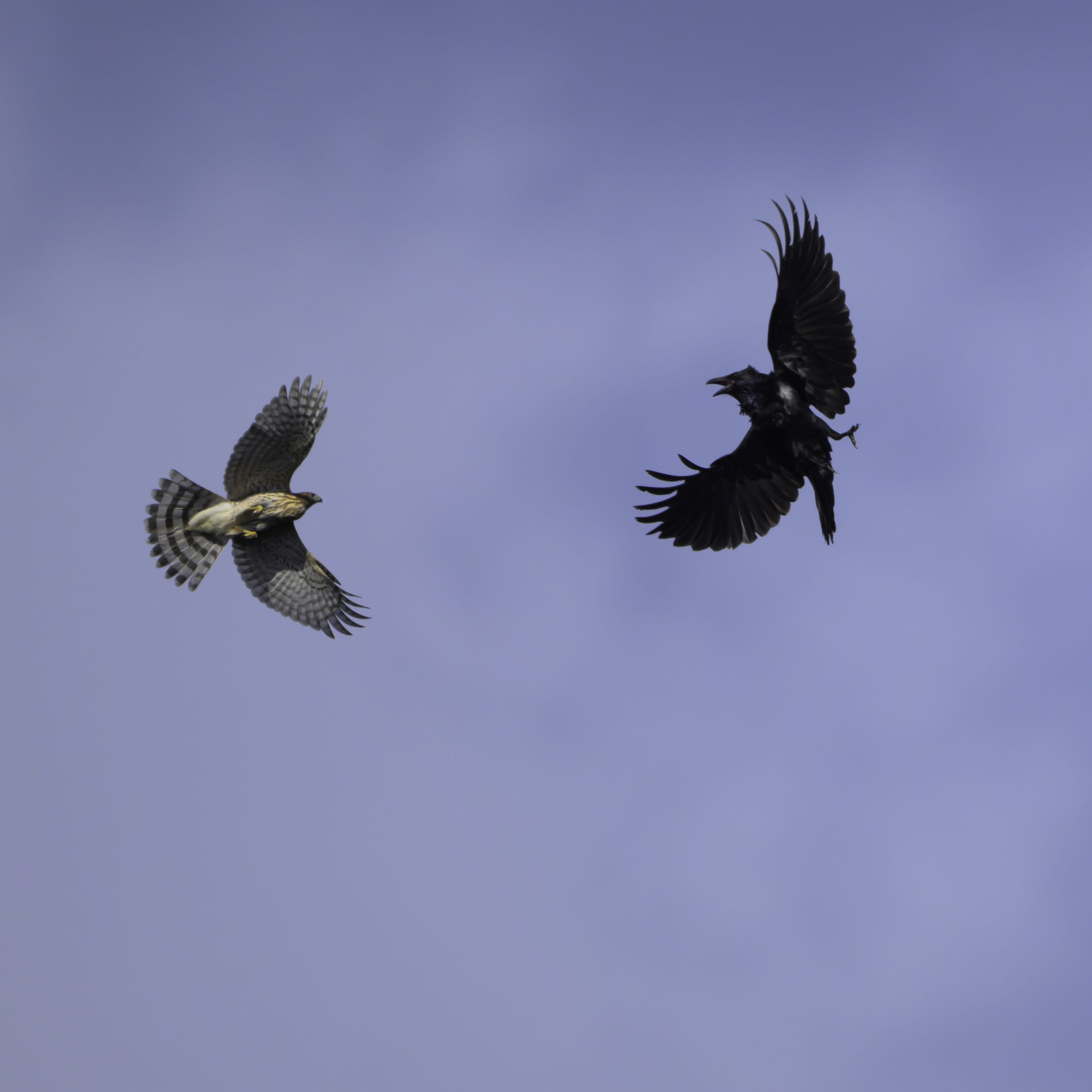
An aerobatic tussle between a Raven and a Cooper’s Hawk captured at the Observatory (photo © Chuck Carlson)
Biologists regularly record up to 15 different raptor species from platform at the Pack Monadnock Raptor Observatory. From mid-September through mid-October, significant daily and seasonal flights of Broad-winged Hawks, Sharp-shinned Hawks, Northern Goshawks, Peregrine Falcons, Ospreys, and Bald Eagles are possible. Mid-October through mid-November often brings Golden Eagles and Northern Goshawks.
During the migration season, detailed reports — including hourly raptor count and weather data, non-raptor observations, special notes, season totals, and next-day forecasts — are posted at the end of each day on hawkcount.org, an online database managed by the Hawk Migration Association of North America (HMANA). Historic migration data are also available via hawkcount.org, and you can find summaries of Pack Monadnock migration data from recent years here. Hawk Watch Coordinator Phil Brown also provides regular in-season updates below.
The Pack Monadnock Raptor Observatory is a project of the Harris Center for Conservation Education, in partnership with the State of New Hampshire Department of Natural and Cultural Resources, Division of Parks and Recreation. It was founded by New Hampshire Audubon.
Updates from the 2026 Season
A Record-setting Broad-winged Hawk Day!
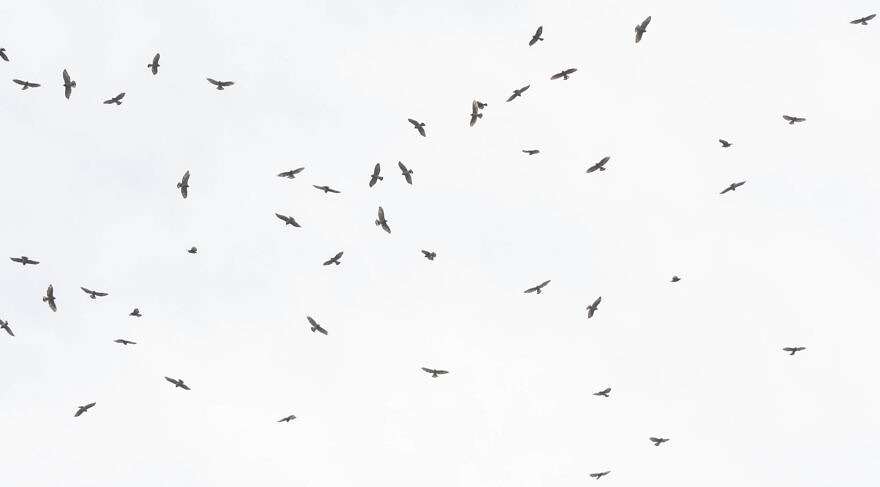
A Broad-winged Hawk kettle swirls above Pack Monadnock. (photo © Judd Nathan)
On September 19, Observatory staff and volunteers — along with a big crew of visiting hawk watchers — witnessed a remarkable flight of Broad-winged Hawks. A perfect combination of winds, weather, and skilled observers came together for this biggest single day in the Observatory’s 22-year history.
In the words of raptor biologist Kate McKay, “An exceptional 4,435 broad-wings passed by during the 12 o’clock hour alone, including one long river of birds flying low behind the trees near the summit. There were many amazing kettles in the hundreds that often appeared over North Pack or the Uncanoonuc hills and re-formed right above us… We ended with a new single day high count for broad-wings, breaking the previous record of 5,208 broad-wings in 2011.”
This flight, which doubled the season’s total raptor count, and subsequent others (three days have now borne witness to over 1,000 Broad-wings each) have buoyed the season’s count to well over 15,000 total raptors. There’s still a little way to go if we’re to top the high water mark of 16,593 Broad-wings (and nearly 20,000 total raptors) in 2015 — but our observers will surely be trying!
Sharpies Play Second Fiddle
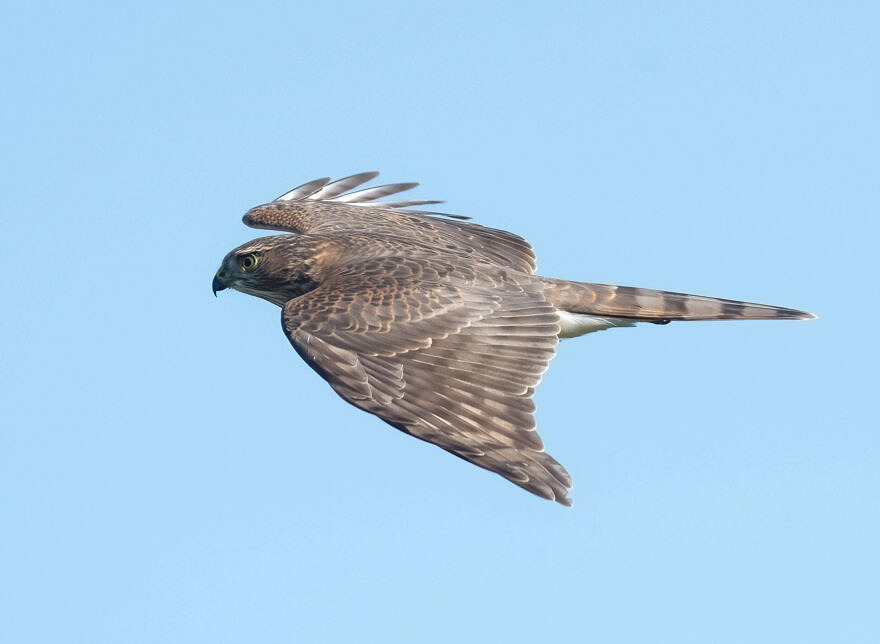
A Sharp-shinned Hawk in flight above Pack Monadnock. (photo © Judd Nathan)
Behind Broad-wings, Sharp-shinned Hawks are the second most counted raptor, and the 700+ thus far is a respectable total for ‘sharpies,’ which should continue to have strong pulses of up to 100 in a day through October.
The fierce antics of these exciting little raptors are fun to watch, as they dive on larger raptor species and even the plastic decoy owl! Ospreys, Bald Eagles, and American Kestrels have also topped 100 migrants apiece thus far, as well.
Free Birds
On September 22, visitors to the Observatory were treated to an exciting spectacle — the release of two rehabilitated raptors back to the wild. This event featured the release of both juvenile American Kestrel and Merlin from Wings of the Dawn in Henniker, NH, a long-time project partner that cares for injured and sick wildlife. It’s always special to be part of this opportunity for raptors to have a second chance to fly free in the wild, and this release didn’t disappoint!
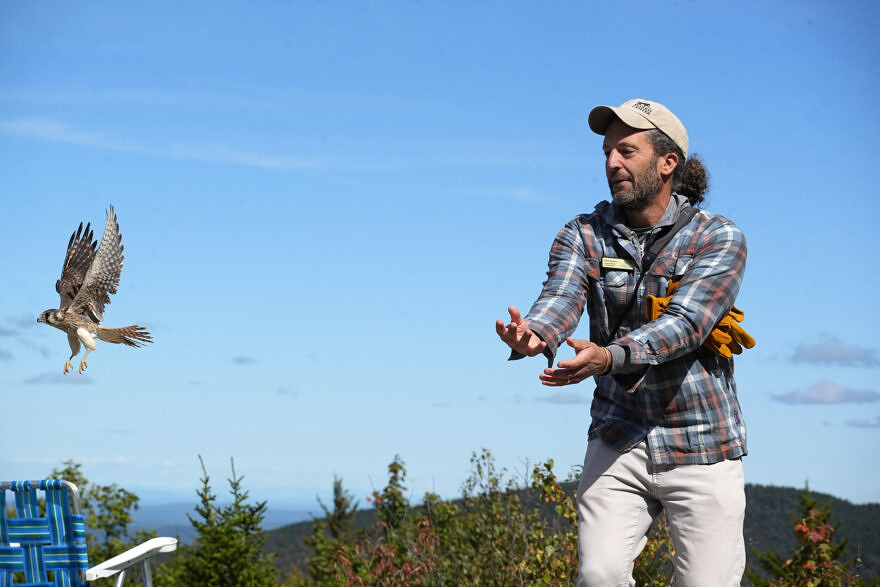
Phil Brown releases a rehabilitated American Kestrel at Pack on September 22. (photo © Gigi Chen)
Songbirds, Butterflies, and a Rare Gull
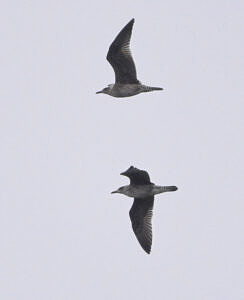
Two Lesser Black-backed Gulls fly past Pack on September 21 — an Observatory first! (photo © Chuck Carlson)
We’ve now tallied over 800 Monarch butterflies — the highest number in several years — and 70 hummingbirds, in addition to many other bird and butterfly species.
One exciting find came on September 21, when volunteer Chuck Carlson photographed what turned out to be not one, but two Lesser Black-backed Gulls, representing the first Pack record — and first documented record for the entire Monadnock Region!
Looking Ahead
A changing of the guard is in the works, as Broad-winged numbers continue to diminish and the bulk of their flight migrates south through the Appalachians. Expect only a few by early October.
Other species, such as Osprey and American Kestrel, will soon reach and pass their own peaks. And some, like the American Goshawk, will begin to appear. (The first migrant ‘gos’ arrived on September 21.) Expect more Peregrine Falcons, Merlins, Sharp-shinned Hawks, and Cooper’s Hawks in the coming week or two.
Please stay tuned to the hawkcount.org forecast for next day’s predictions and to follow the count each day. We continue to encourage visitors to make reservations to visit Miller State Park through the busy months of September and October.
Broad-winged Flights Kick Off International Hawk Migration Week!
Just over two weeks into the hawk watch season, the Observatory is off to a strong start, with more than 5,100 raptors tallied so far. Broad-winged Hawks — which typically account for nearly 70% of the annual raptor flight — got an early start this year, with triple-digit days on September 6 and 7.
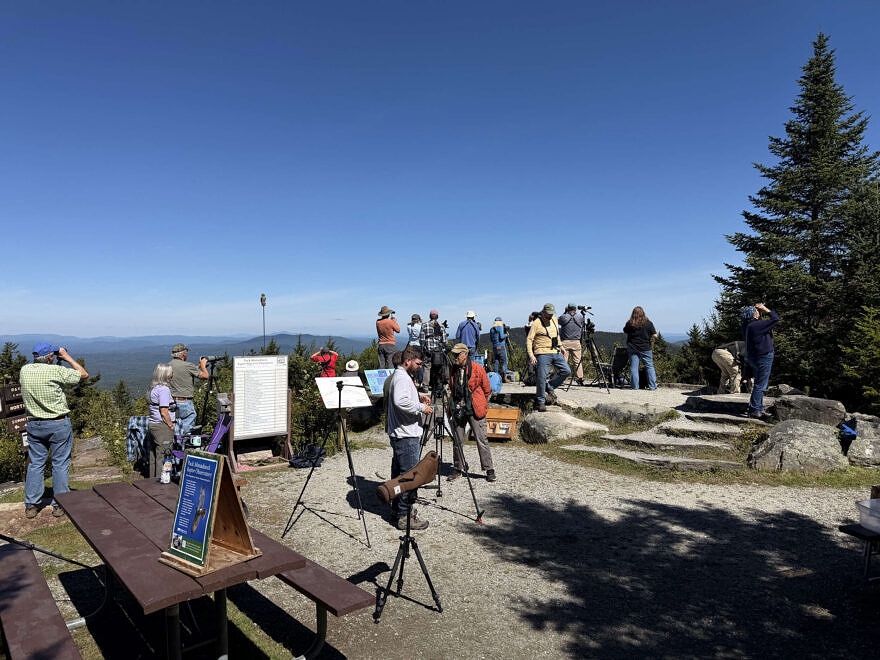
Harris Center Naturalist Emeritus Meade Cadot talks with a WMUR TV crew during a day of hawkwatching on Pack Monadnock.
(photo © Phil Brown)
The real breakout came on September 15, when a remarkable 2,626 Broad-winged Hawks drifted over Pack Monadnock, circling lazily in towering “kettles” of up to several hundred birds. Several dozen spectators (as well as a film crew from WMUR’S New Hampshire Chronicle) were also treated to the season’s highest-to-date tally of Osprey, Bald Eagle, and Peregrine Falcon.
International Hawk Migration Week (IHMW) is a weeklong celebration of raptor migration across the Americas, where over 200 hawk watch locations under the umbrella of the Hawk Migration Association (a project partner) contribute data and showcase the magic of raptor migration.
While many of us remain focused on raptors, the Harris Center’s staff and volunteers keep track of so much more! Over 400 monarch butterflies and 63 hummingbirds have winged their way south past the lookout this season. Common Loons, Common Nighthawks, and several species of warblers have added diversity to the airspace, and interesting dragonfly and butterfly species have been tallied too.
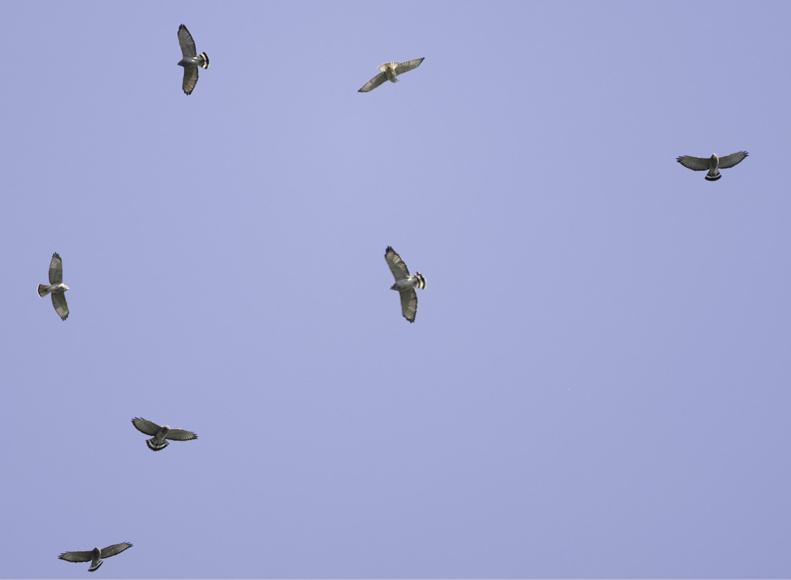
A kettle of Broad-winged hawks soars over Pack Monadnock. (photo © Chuck Carlson)
Raptor Release on September 20
A raptor release is planned at the Observatory for Tuesday, September 22 at noon sharp. It’s always special to see raptors get a second chance at life in the wild. This event features the release of rehabilitated raptors from Wings of the Dawn, and it will take place only if weather conditions permit. Please stay tuned to the hawkcount.org forecast for updates. Reservations to visit Miller State Park are strongly recommended for this popular event.
What’s Ahead?
Broad-winged Hawks should continue to dominate the leaderboard for another week or so. As we progress through IHMW, several other species should reach their peak flights, including Osprey, American Kestrel, Northern Harrier, and Sharp-shinned Hawk. Cooper’s Hawks and Red-shouldered Hawks should also become more numerous, while a diversity of other migrating bird species keeps the count dynamic from day to day.
Our community of human visitors also increases during Broad-winged season and builds to a peak during the first few weekends of October, when foliage is at its best. We welcome all to join the fun, but please be advised that online reservations are encouraged during these busy periods.
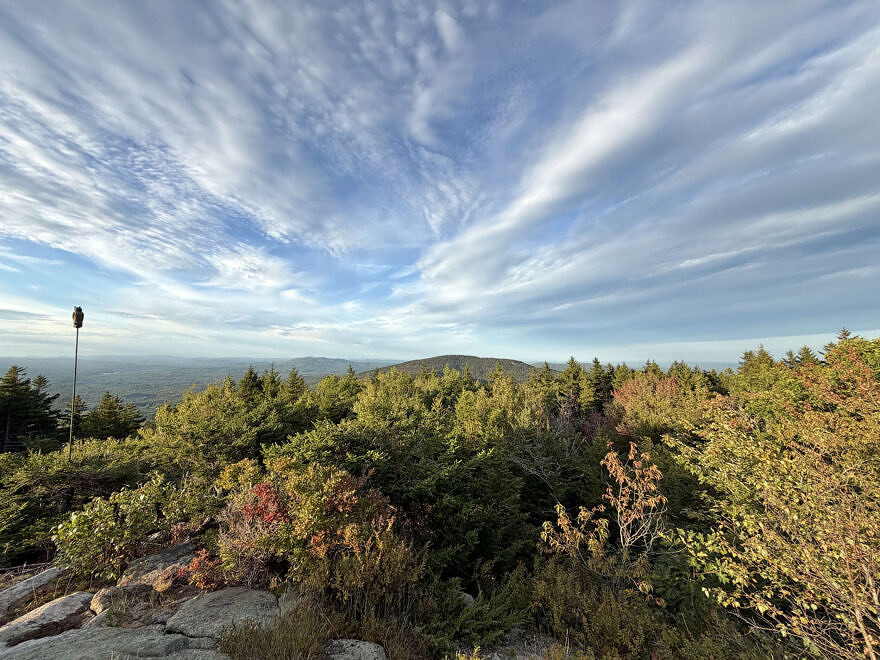
An autumn view from the Observatory platform. (photo © Phil Brown)
For an in-depth look at what it’s like to work at the Observatory, read Fall Hawkwatching on Pack Monadnock, a thoughtful and informative new essay by our raptor biologist Kate McKay — and stay tuned to this Field Report page for further updates!
Soaring into Our 22nd Season…
Another season of hawk watching is upon us! Now entering its 22nd consecutive year, the Pack Monadnock Raptor Observatory continues to thrive, thanks to support from the Harris Center, NH Parks, and all of you. Eager star volunteer Glen Chretien has already tallied 110 migratory birds of seven species during the past “pre-season” week, and migration should pick up soon.
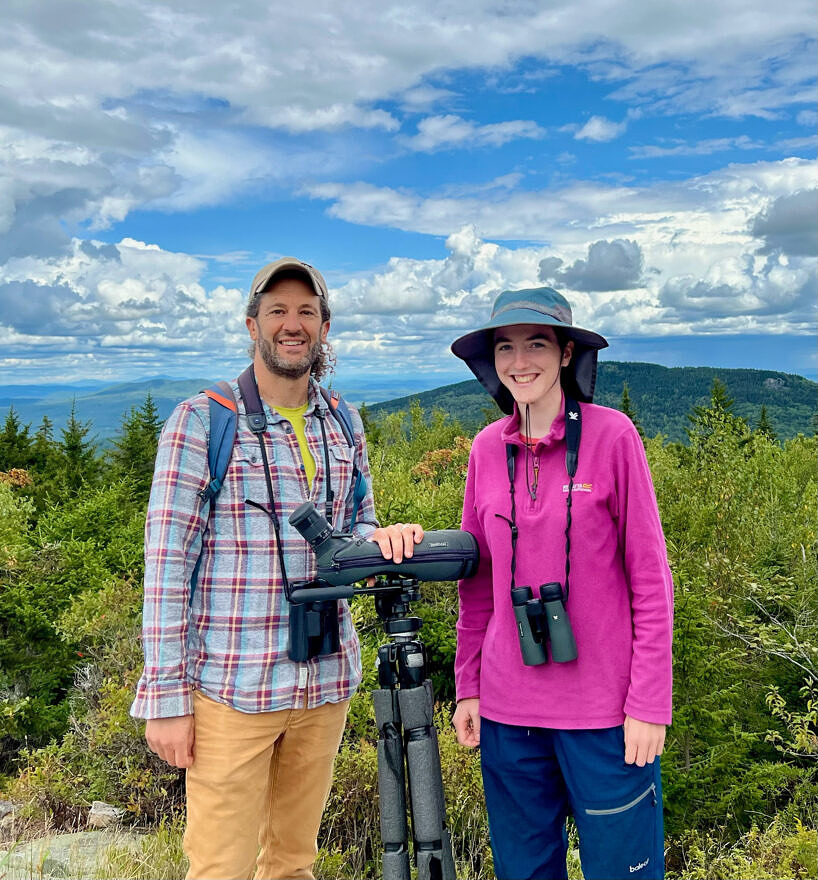
Bird conservation director Phil Brown & raptor biologist Kate McKay (photo © Glen Chretien)
Welcome Back, Kate
We’re excited to welcome Kate McKay back as our full-time raptor counter for a second year. Kate, a former wildlife intern for the Harris Center, returns to us most recently from a position monitoring grassland birds and educating landowners about grassland bird conservation in NH and VT. She’s excited to greet our awesome community of raptor fans, be outside with birds (and dragonflies!), and be a welcoming face for the Observatory’s many visitors. Kate will be the lead counter from Thursdays through Mondays.
Our 2026 Hawk Watch Team
This year, Harris Center ecologist Nate Marchessault will also be returning to the Hawk Watch on Wednesdays, and Julie and Phil Brown will again cover most Tuesdays. Harris Center teacher-naturalist Nikko Gagnon also returns for a fourth season to help with interpretation and school group visits on Wednesdays from early September to late October. What a team!
Visiting the Hawk Watch

Every year, more than 6,000 visitors enjoy the science and spectacle of migration from the Pack Monadnock Raptor Observatory.
(photo © Ben Conant)
The Harris Center and NH Parks welcome all to enjoy and learn about the science and spectacle of migration with us! While the Hawk Watch is free to visit, reservations for visiting Miller State Park are strongly recommended to guarantee your space on the mountain, especially on busy weekends. Please contact the Park with any questions about school or other group visits. You can find more information about visiting the Hawk Watch here. This season, you may notice a newly re-paved road to the summit and improved access to the Hawk Watch platform!
Thank You & Stay Tuned…
The Harris Center relies on private contributions to keep the Observatory strong. Your support of this important conservation research and education project enables our team to reach more than 6,000 people every year, and to contribute important data to a long-term hawk migration database. To contribute, visit harriscenter.org/donate and select “Pack Monadnock Raptor Observatory” from the dropdown menu, or donate by mail, noting “PMRO” on the check. Thank you!
More updates and hawk-watching adventures are on the way. Keep your eyes to the sky, and stay tuned to this Field Reports page for more news from atop Pack Monadnock!
Contact Us
For more information on the Pack Monadnock Raptor Observatory or to volunteer, please contact Bird Conservation Director Phil Brown.


