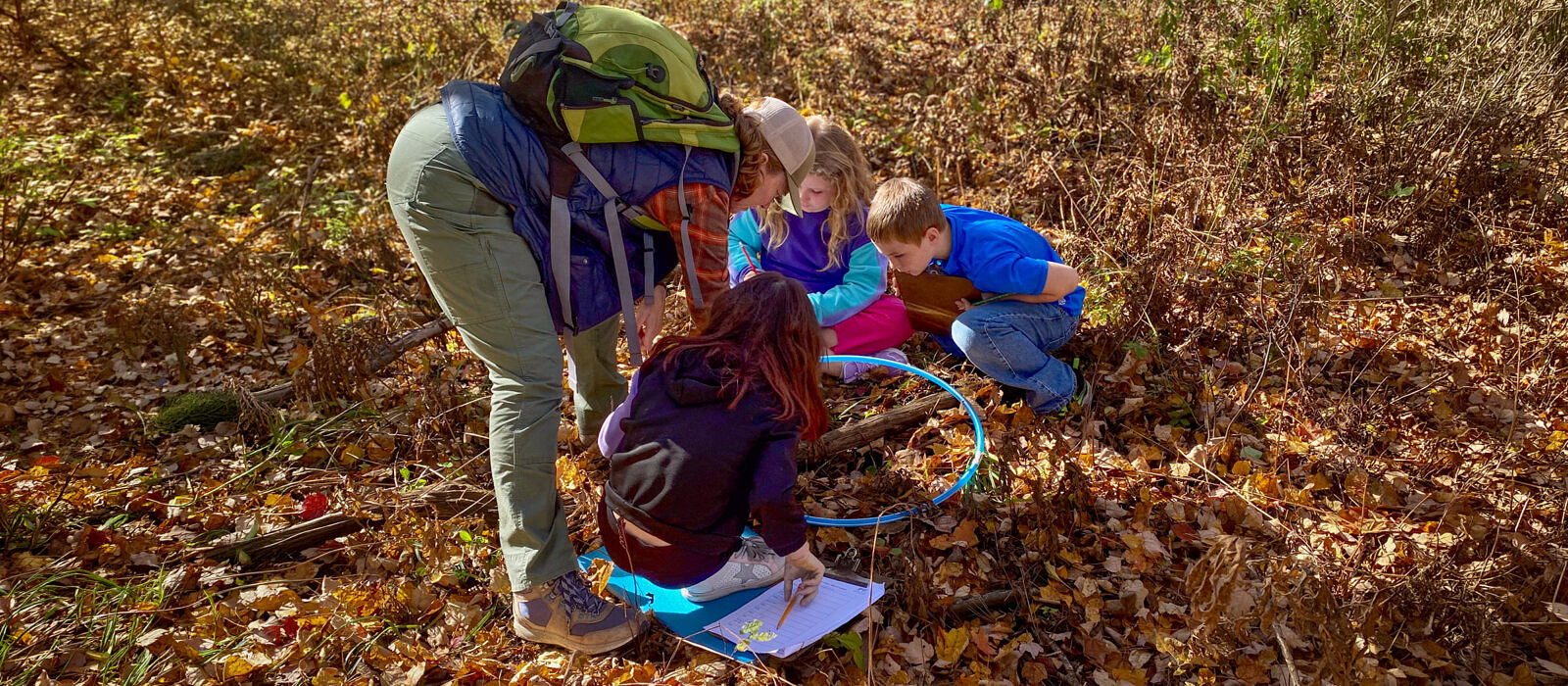
Every year, Harris Center teacher-naturalists work with more than 3,000 students in 40 schools across the Monadnock Region. This year, we’re especially excited to be working with 3rd graders at all four of Keene’s elementary schools. In Abbie Olson and Kristy Symond’s classes at Wheelock School this fall, students dove deep into animal classification with teacher-naturalist Jenna Spear.
The unit began with a challenge. Students sorted a collection of stuffed animals into categories of their own choosing, then asked their classmates to figure out what the animals in each pile had in common. From porcupines to roly-polies, the students sorted like experts. Some grouped the animals by what they ate, while others looked at whether they had a backbone. Before long, there were piles of vertebrates and invertebrates, omnivores and herbivores, birds, mammals, and reptiles all around the classroom.
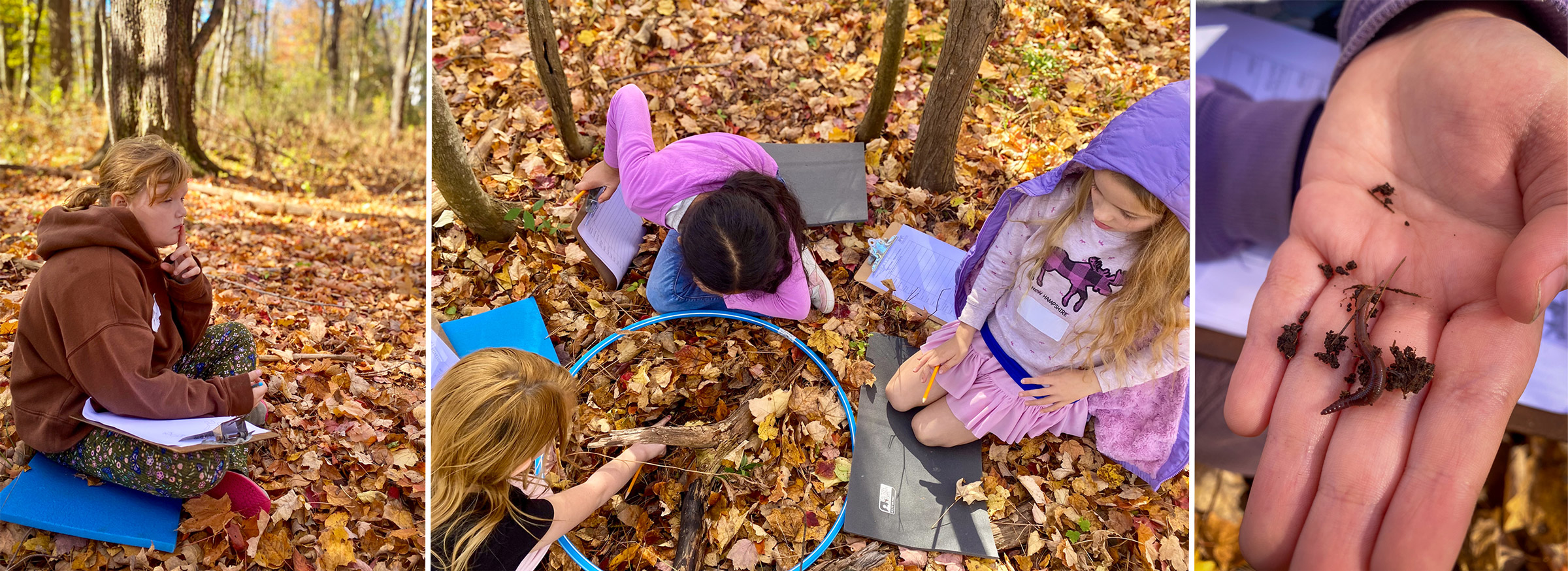
Wheelock School 3rd graders listen and look for wildlife in the woods near their school. (photos © Abbie Olson)
Next, students took their search outdoors. Which would turn up a greater variety of animals or signs of them: the schoolyard or the woods a few blocks away?
By looking and listening carefully, students discovered that the schoolyard was full of invertebrates, birds, and mammals (so many squirrels!). In the nearby woods, they found mammal scat, wood gnawed by a beaver, an owl pellet, and plenty of invertebrates in and under rotting logs. They even found slug eggs! A wildlife camera there also recorded bobcats and deer.
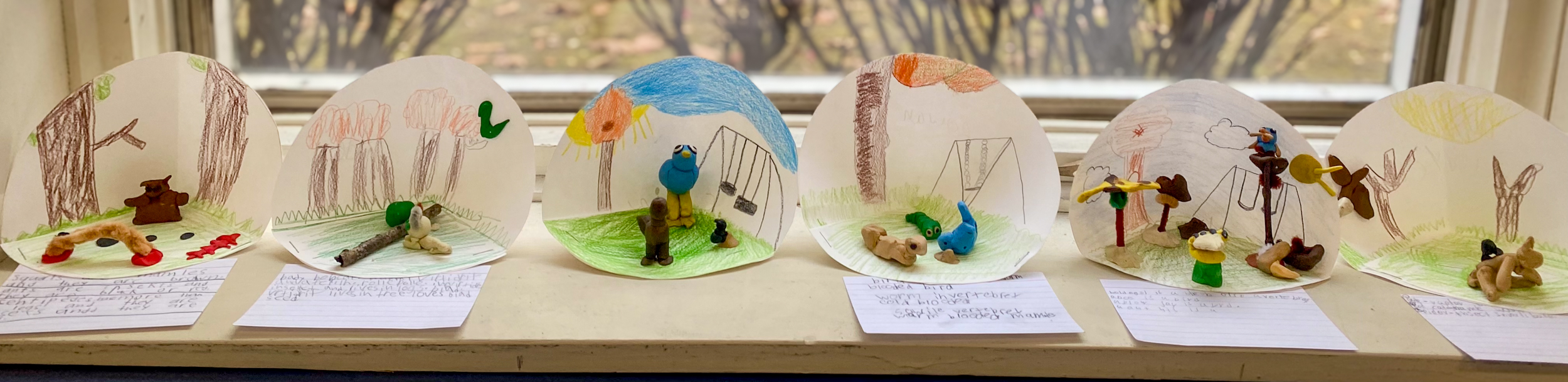
Wildlife dioramas made by the 3rd graders at Wheelock School in Keene (photo © Abbie Olson)
For their final project, students made dioramas of the wildlife they’d been studying. One of the biggest surprises for students and teachers alike was how much wildlife there was to discover just a few blocks from their classroom.
To learn more about our school-based environmental education programs, see our School Programs page or contact Jenna by email.

Your Gift Makes a Difference
Thanks to our incredible community of supporters, the Harris Center continues to protect wild places, educate people of all ages, and run vital community science programs. Your generosity makes everything we do possible — from preserving habitat for bobcats and birds to inspiring the next generation of environmental stewards.
We invite you to make a gift today to help sustain this important work. On behalf of the turtles, trees, wildflowers, salamanders, and butterflies — and the people who cherish them and our wild places — thank you!


