Hope for the Wild
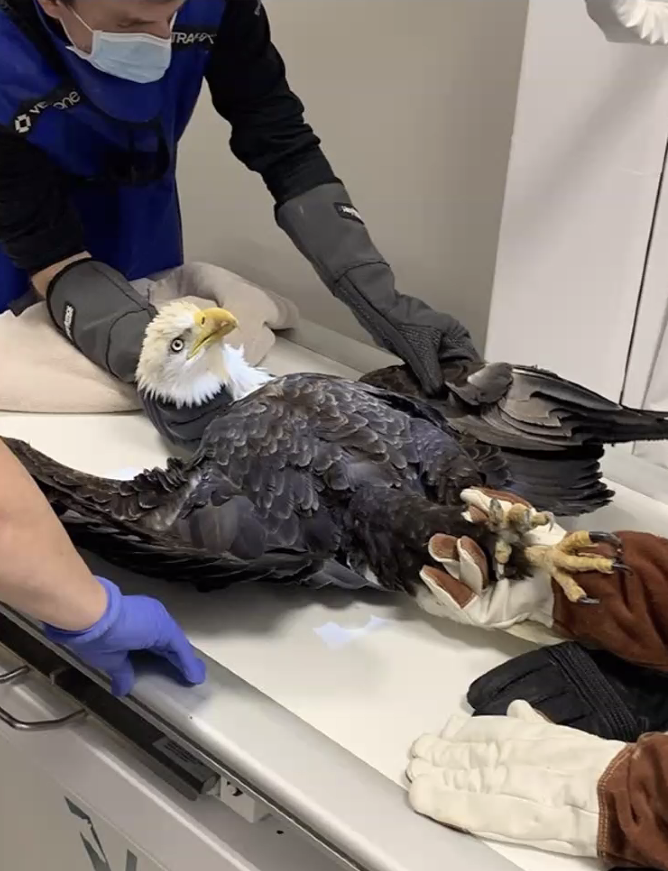
A bald eagle receiving medical treatment
(photo © the New Hampshire Veterinary Center for Wildlife)
New Hampshire’s wildlife are at a tipping point. Every year, more than 1,500 injured or orphaned wild animals need veterinary care in the Granite State — turtles hit by cars, owls poisoned by rodenticides, and loons sickened by lead. Yet licensed wildlife rehabilitators in the state have dwindled from 19 to just a handful, and most veterinary hospitals aren’t equipped to help.
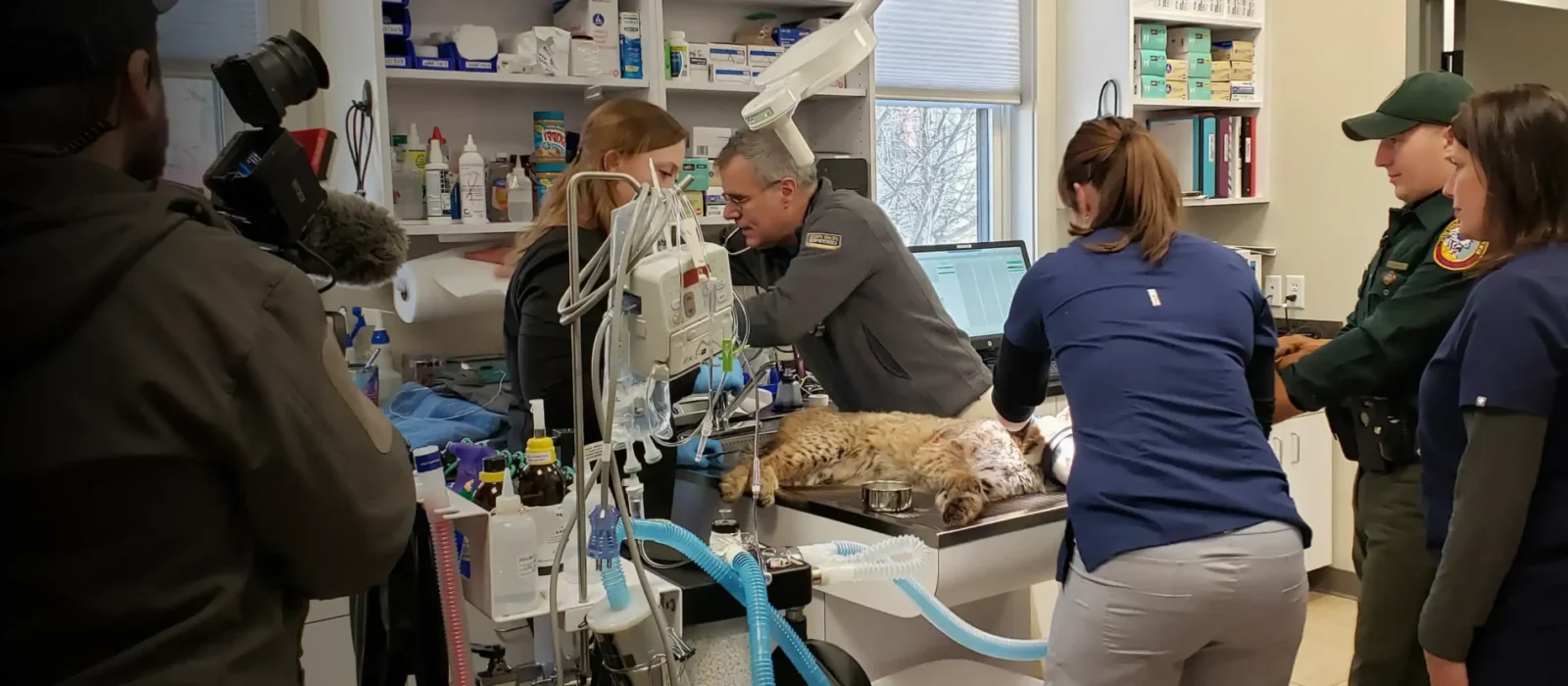
That’s why Dr. Michael and Helen Dutton, lifelong veterinarians and wildlife advocates, are creating the New Hampshire Veterinary Center for Wildlife. Mike brings 38 years of experience, much of it in pro bono wildlife care, and Helen has partnered with him every step of the way. Together they’ve repaired eagle wings, raised orphaned owls, and even appeared on the Animal Planet show Northwoods Law (pictured above). Now, instead of stepping back in retirement, they’re stepping up, asking: “If not us, then who?”
In a recent Zoom program (recording below) sponsored by the Harris Center, the Duttons shared their vision for training the next generation of veterinarians and rehabilitators in wildlife medicine — a skill set rarely taught in vet schools.
As the Duttons explain, the needs are clear: the Granite State urgently requires more trained wildlife rehabilitators and veterinarians who are able to provide medical care for wild animals. Their plan to meet these needs is multifaceted — increasing training for veterinary professionals, educating future licensed wildlife rehabilitators, and equipping veterinarians and animal hospitals with the diagnostic tools and medications necessary for wildlife care. They also aim to create a statewide communication network to support wildlife caregivers, ensuring that help and expertise are never out of reach.
As outlined in their presentation, their idea of centralizing wildlife care has strong support from NH Fish and Game, wildlife rehabilitators, veterinarians, educators, and others, but is at a critical stage. They have the land for a facility, an architectural design, and town support, but need to raise $6 million to make their dream a reality.
You can help by donating to the project, sharing this video and article with others who might be interested in their work, and signing up for the email newsletter on their website.
Together, we can give wild animals — from songbirds to eagles, turtles to bobcats — the care they need and deserve.


