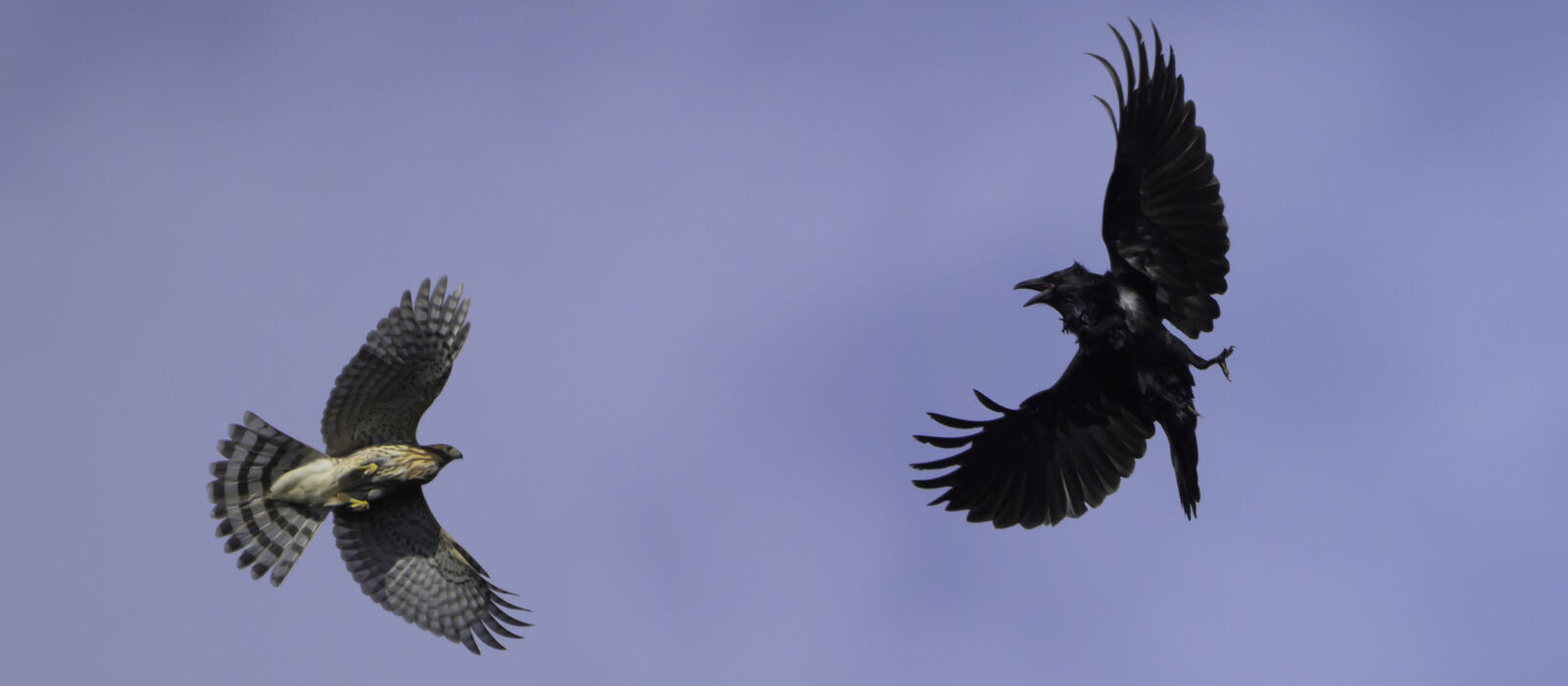
A Season Overview
In late November, the Pack Monadnock Raptor Observatory wrapped up another successful season. Kate McKay was our 2025 raptor biologist, and served as the official counter five days a week. Other Harris Center staff and several volunteers filled in the remaining time to provide full coverage for the annual count, which logged over 600 hours of observation time. During this 21st consecutive season of migration monitoring, the Harris Center team counted 8,581 raptors of 15 species between September 1 and November 20.
Though the season tally was again below the long-term average due to a second consecutive year with fewer Broad-Winged Hawks (5,821), the results were mixed for other species.
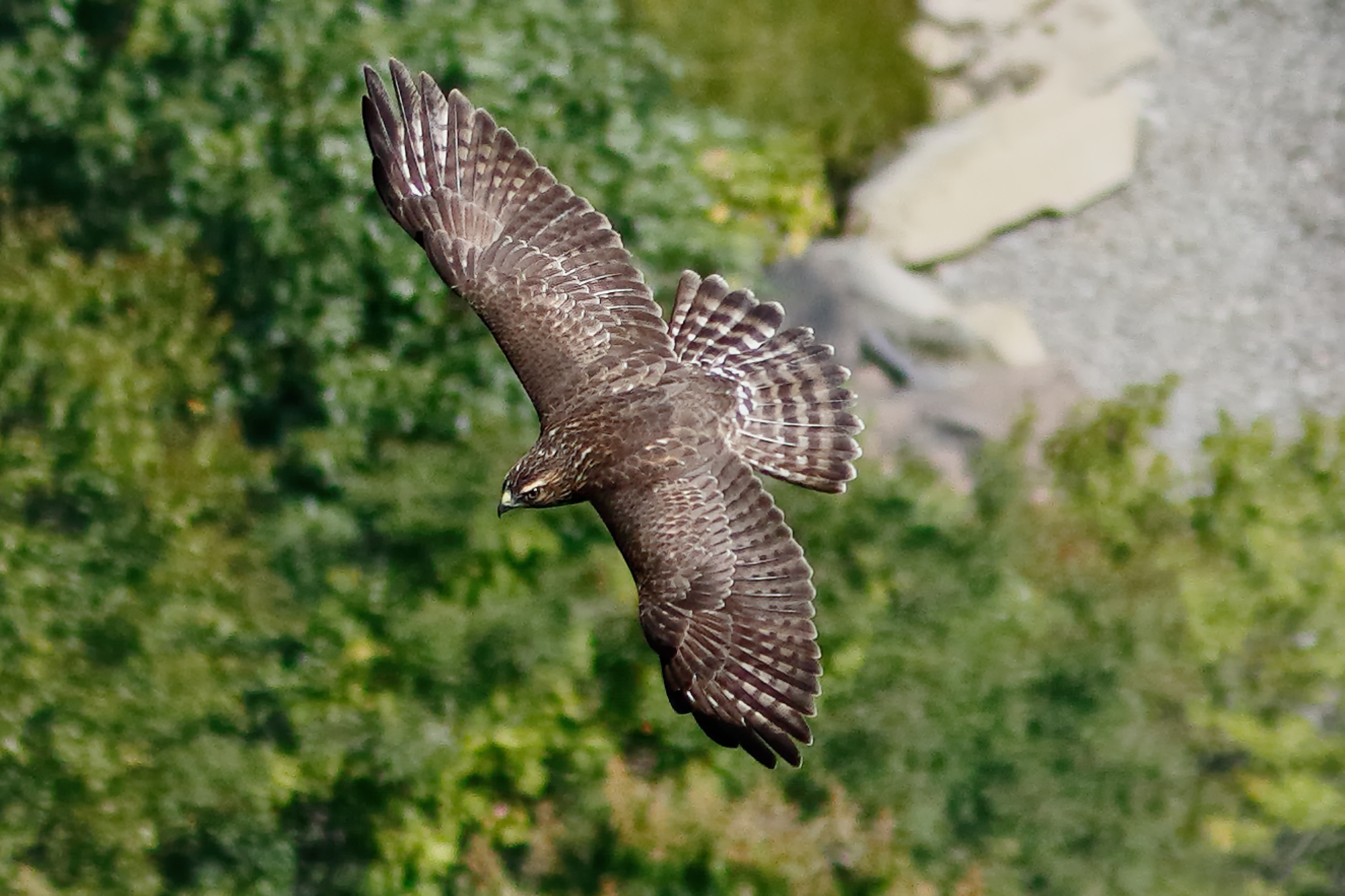
A Broad-winged Hawk in flight (photo © raven.digital)
A Banner Day for Broad-wings
The season’s peak day was September 14, when more than half of the season’s total Broad-winged Hawk flights took place. Over 3,000 broad-wings moved through in spectacular flocks that day, leading to the highest daily tally of this species in several years. This high count came on the earlier side of their historic peak date, which typically falls between September 15 and 20. But the early push did not continue, as the flight again seemed to shift to other ridgelines (as it did in 2024), more reflective of daily weather patterns than of diminishing populations. Despite the relatively low count, this common forest-breeding species still represented 68% of the total raptor migration observed at the Pack summit.

A kettle of Broad-winged Hawks (photo © Chuck Carlson)
Dependable Fall Flyers
Other raptors have shown more consistency over the years. The Sharp-shinned Hawk (1,142), the second most abundant migrant seen at the Observatory, is one such species. On September 19, we recorded a high count of 130, the second-highest daily count in Observatory history. This is a welcome positive data point for a species seeing steep long-term drops at hawk watches around the continent, pointing to the need for further research into why this secretive northern forest breeder is experiencing declines.
Raptors on the Rise
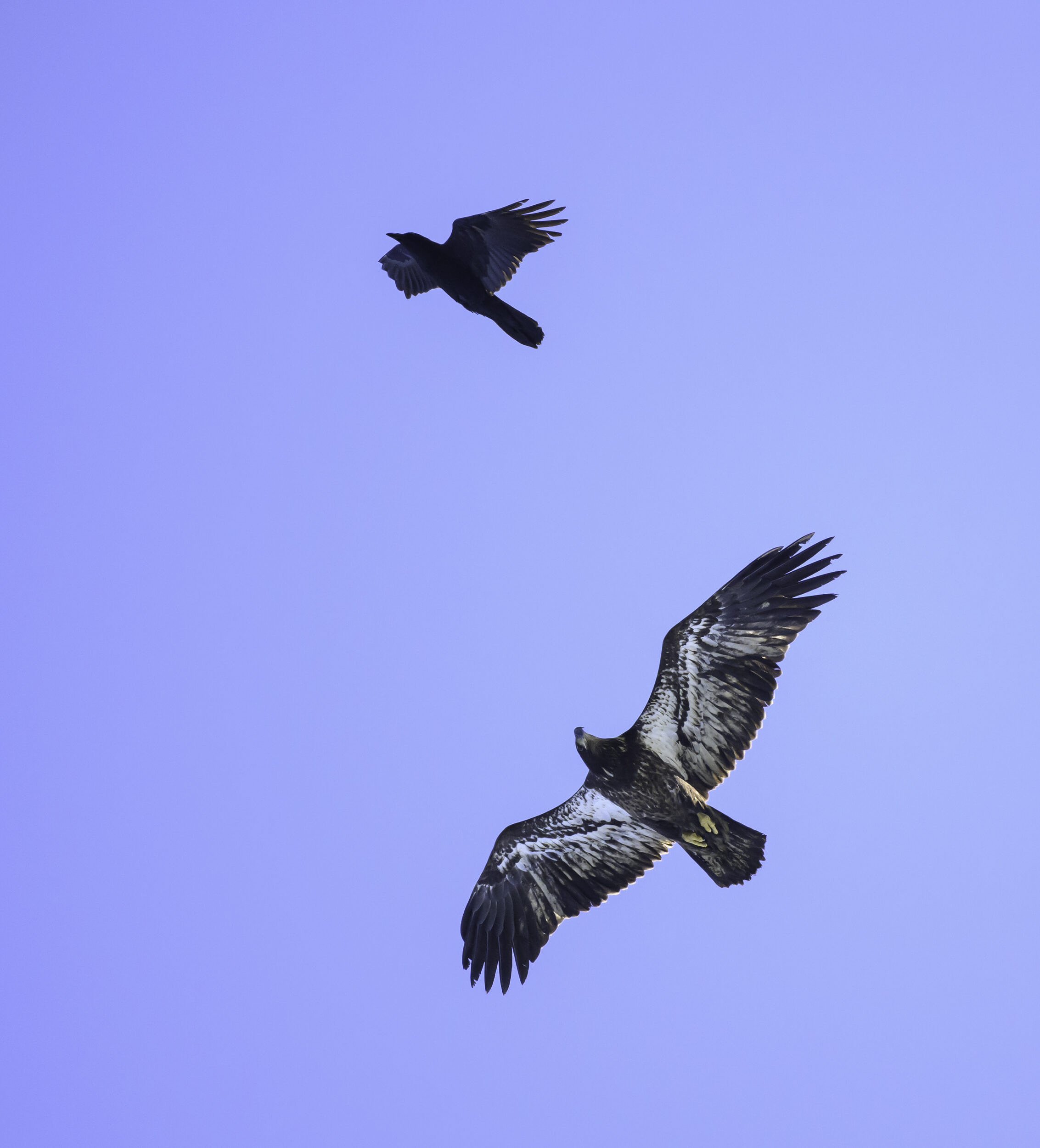
A Common Raven and an immature Bald Eagle (photo © Chuck Carlson)
Above-average tallies were noted for several species. Most notable was the increase in Black Vultures (6), which set a new season-high count. This opportunistic scavenger continues to expand its range northward and has now become expected an expected visitor at Pack — but observers were still a little surprised to see Black Vultures on multiple days. Northern Harrier (122), a state-endangered species, fell just shy of its historic season high of 125. Further, observers were able to age more than 80% of the migrant harriers, determining that three of every four were juveniles. This may point to a successful breeding season in places to the north and east.
American Kestrel (196), another species of open country, had a strong showing. Forty-two were seen migrating on September 14, the second-best day in the project’s history for this charismatic little raptor. Nest box projects, like the one launched by the Harris Center in recent years, may be starting to show promising results for this species in decline.
Turkey Vulture (222), Bald Eagle (170), and Cooper’s Hawk (191) were all slightly above their historic averages, with Cooper’s Hawks reaching their highest tally since 2006. An impressive 17 Cooper’s Hawks passed the watch on September 11, tying the second-highest single-day count. Each of these species has experienced significant upward population trends in recent years.
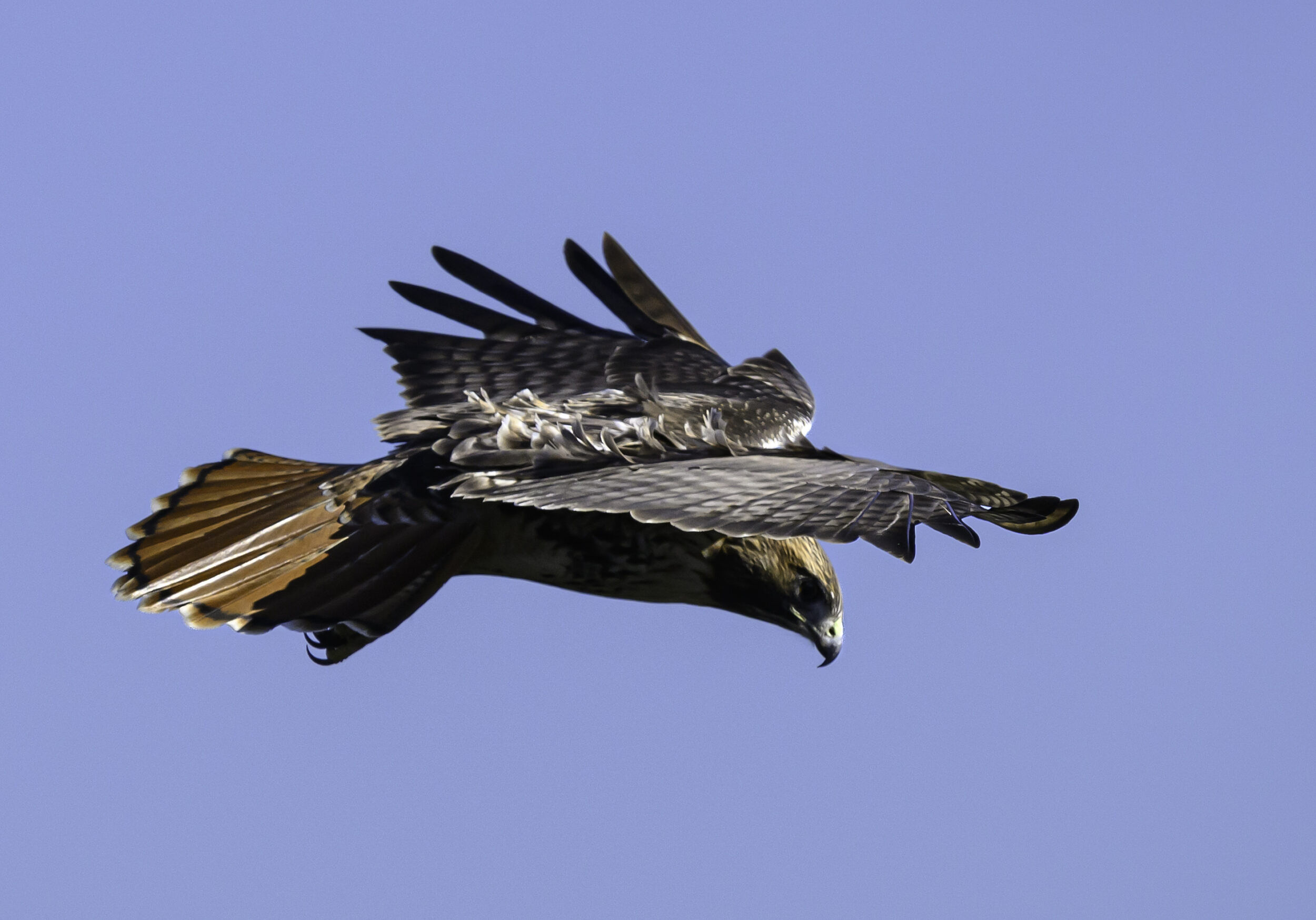
A Red-tailed Hawk at the Observatory (photo © Chuck Carlson)
Below-Average Counts
As usual, some species also fell below their long-term average counts. These included Osprey (167), Red-tailed Hawk (264), Merlin (80), and Peregrine Falcon (30). Ospreys and Red-tailed Hawks have seen long-term declines in migration, while Merlins and Peregrines have been increasing, according to data compiled through the Raptor Population Index. This useful tool measures raptor populations over time, and incorporates data from our Observatory into their analyses.
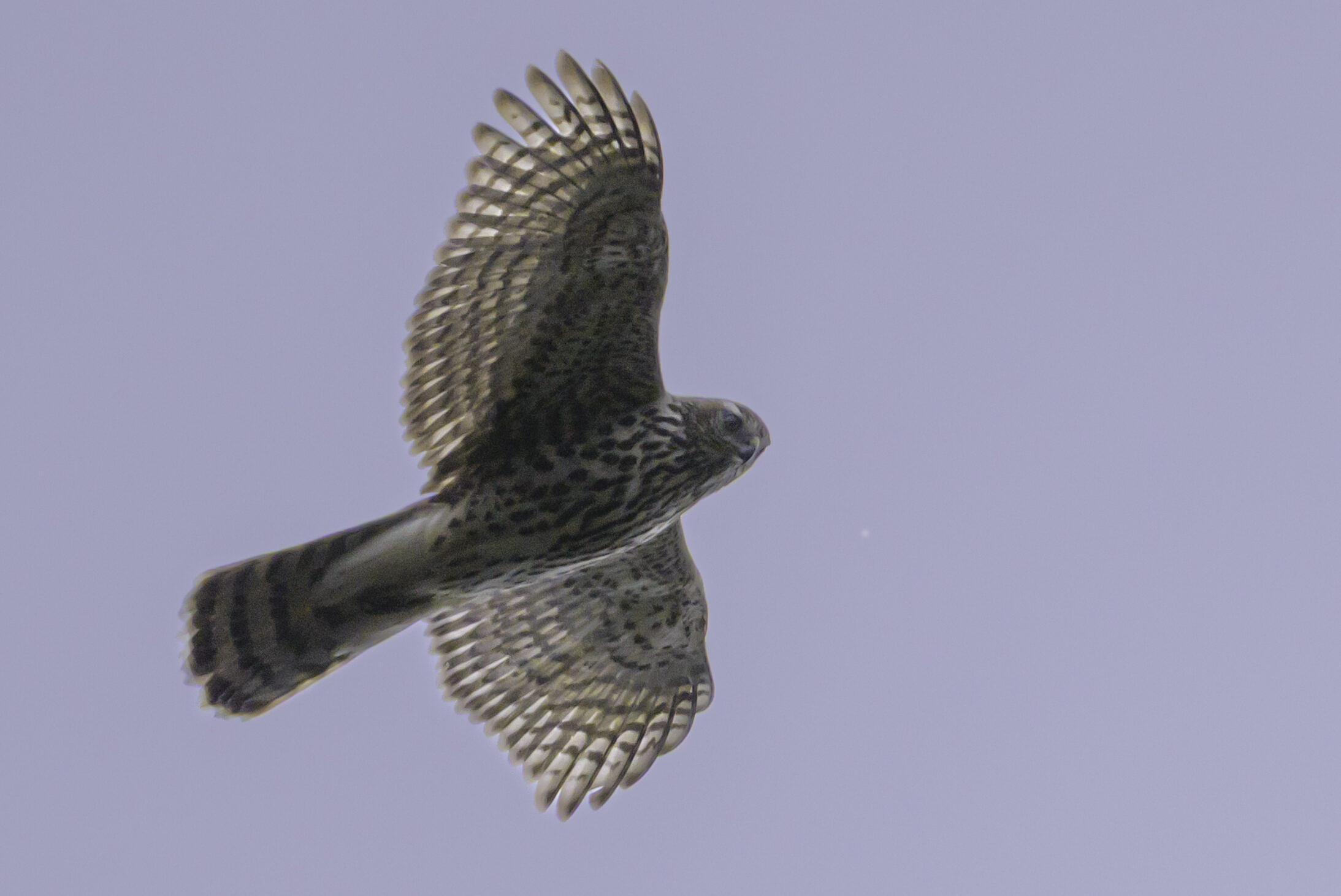
An American Goshawk (photo © Chuck Carlson)
Concerning Declines
More concerning were the species that fell well below long-term averages. American Goshawk (13) showed another lackluster season, but each sighting of this uncommon raptor was memorable and generated considerable excitement. The Harris Center has surveyed breeding goshawks in the Monadnock Region for several years, and recently participated in a regional effort to monitor breeding populations throughout the Northeast. The Red-shouldered Hawk (104) is generally a late-season migrant, but its peak never arrived this season. Despite positive long-term population trends in the Northeast, this season’s paltry tally was the lowest since 2011. Finally, another uncommon migrant, the Golden Eagle (5), had a sparse showing this season, but each sighting of this spectacular large raptor was quite special for those lucky enough to bear witness.
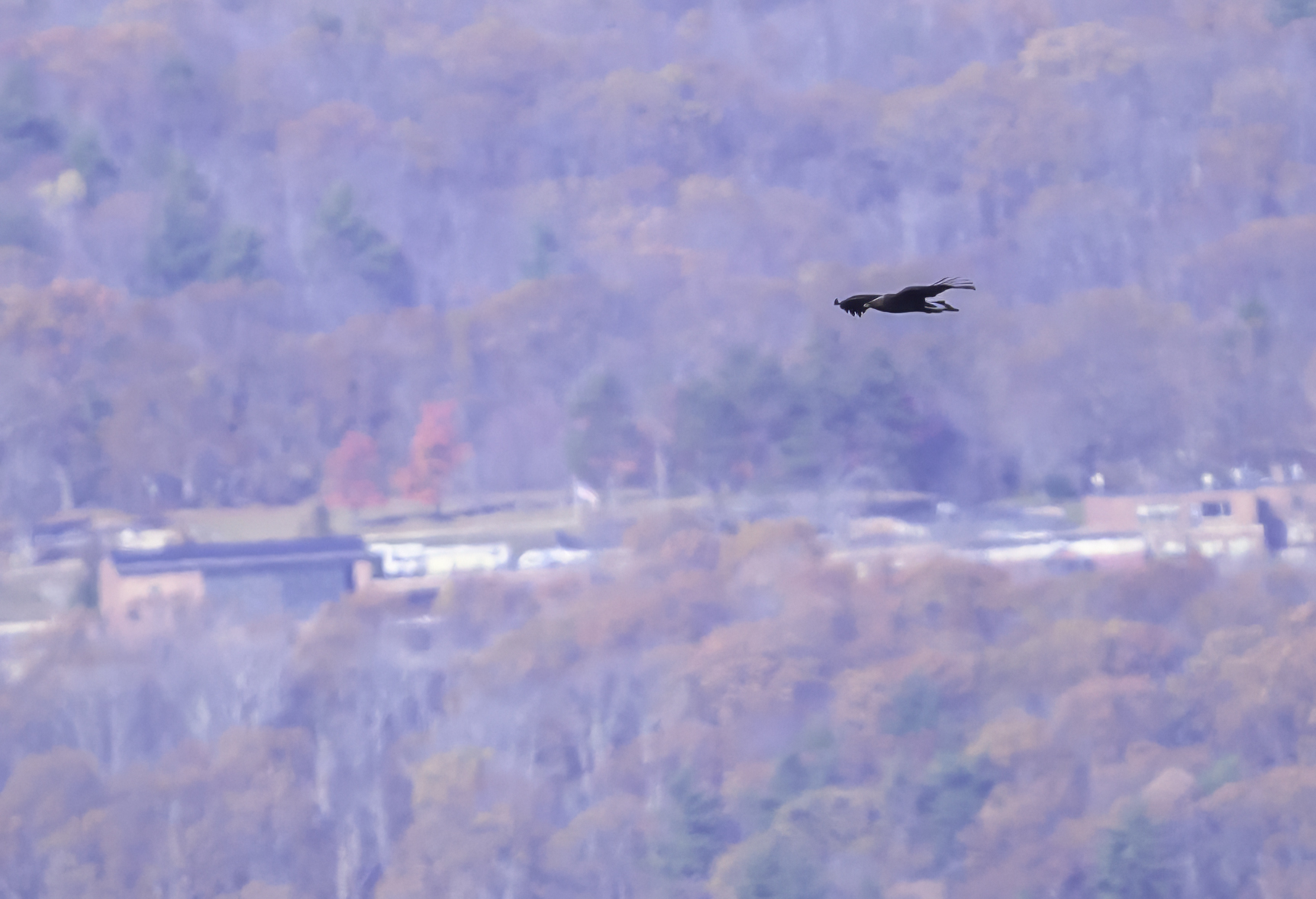
A Golden Eagle soars above the Pack Monadnock Raptor Observatory. (photo © Chuck Carlson)
Other Avian Highlights
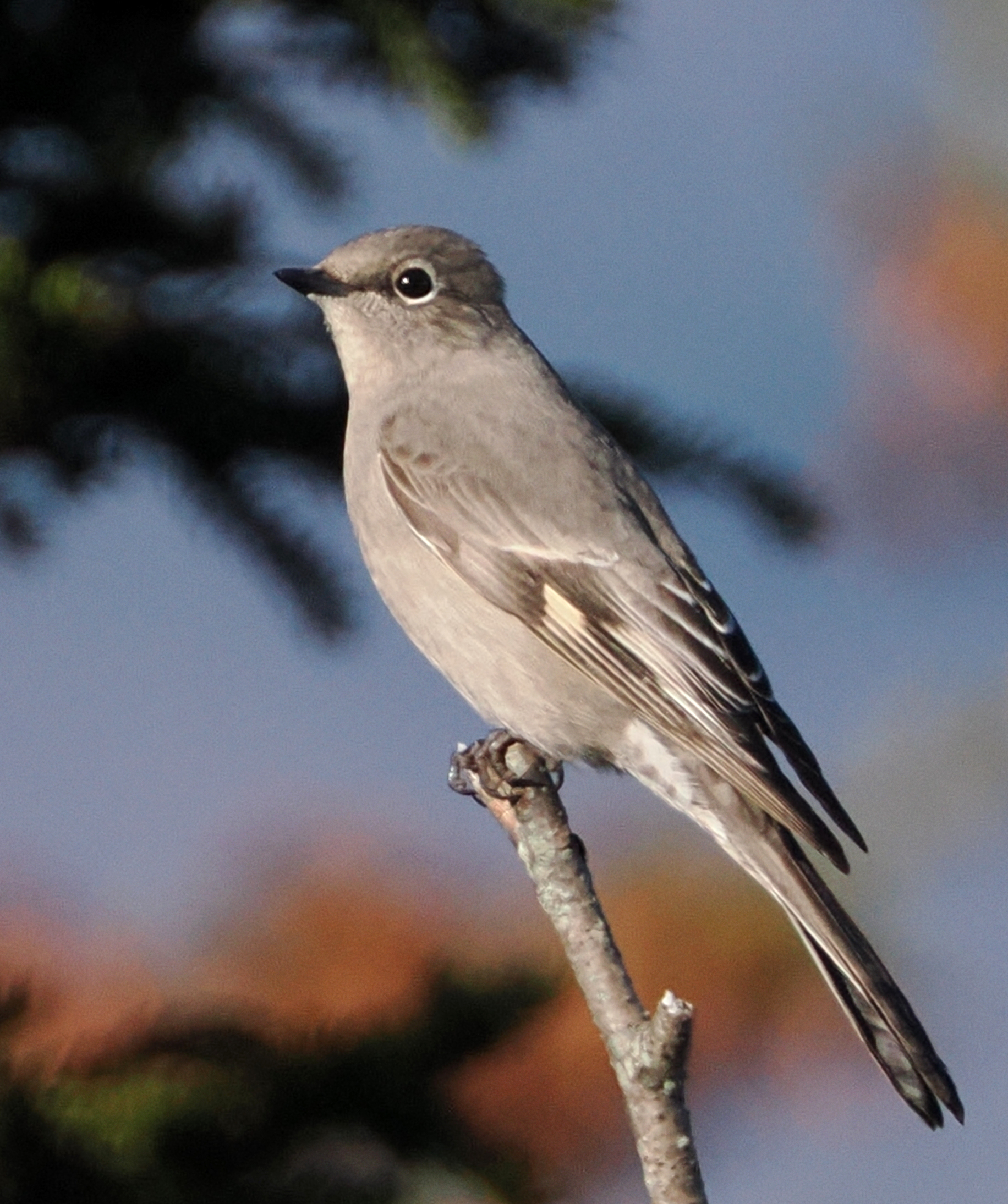
A rare Townsend’s Solitaire was spotted at the Hawk Watch this year. (photo © Nora Hanke)
Our biologists tally more than raptors; all bird species observed at Pack are recorded on daily eBird checklists. This season brought an exciting mix of northern specialty birds — including Pine and Evening Grosbeaks, White-winged Crossbills, and a Northern Shrike — along with uncommon waterfowl like flocks of Brant, and even a true rarity: the Observatory’s third-ever Townsend’s Solitaire, confirming Pack as New Hampshire’s top hotspot for this western vagrant.
Insects on the Move
Kate and other observers also tallied monarch butterflies (which surpassed 500 this season, a higher count than in recent years), as well as migratory dragonflies. An invasive spotted lanternfly was also identified at the Observatory in late September, furnishing one of the region’s first records of this incoming threat.
The Magic of Migration
Human visitors get counted too, and in great numbers! During the 2025 season, our team welcomed 6,449 visitors — locals and tourists alike, including people from many different countries. Crowd-pleasing Observatory events included our popular Raptor Release, in which three rehabilitated Broad-winged Hawks — all recovered from rodenticide poisoning — were released back to the wild in front of a large crowd of spectators during the peak of Broad-winged migration in late September; the annual “Big Sit,” which tallied 33 species on World Migratory Bird Day in mid-October; and the “Big Soup,” a friendly soup competition hosted by Hawk Watch volunteers in early November.
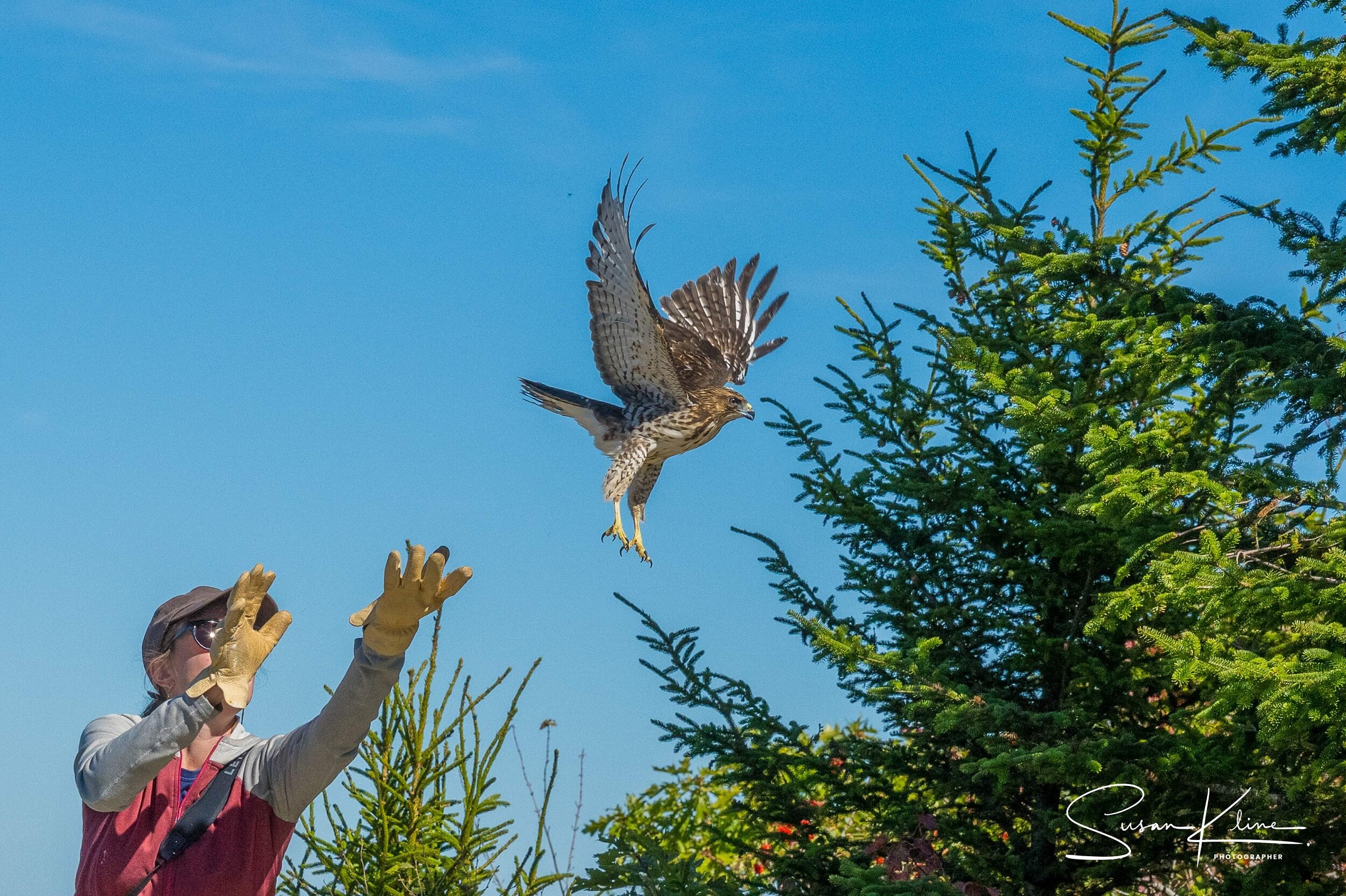
A Broad-winged Hawk is released back into the wild after rehabilitation. (photo © Susan Kline)
Inspiring the Next Generation
Harris Center educators hosted nine visiting school groups at the Hawk Watch in 2025, an investment in the next generation of naturalists and raptor enthusiasts. Shortly after one of these field trips, Hawk Watch volunteers Glen and Lori Chretien happened upon an elementary school student giving an impromptu performance at a local pizza place. This young girl demonstrated the flight habits of Buteos versus Accipiters, reciting a song that Harris Center naturalists use to help students recognize the differences between these classic raptor families. We were happy to hear we made such an impression!
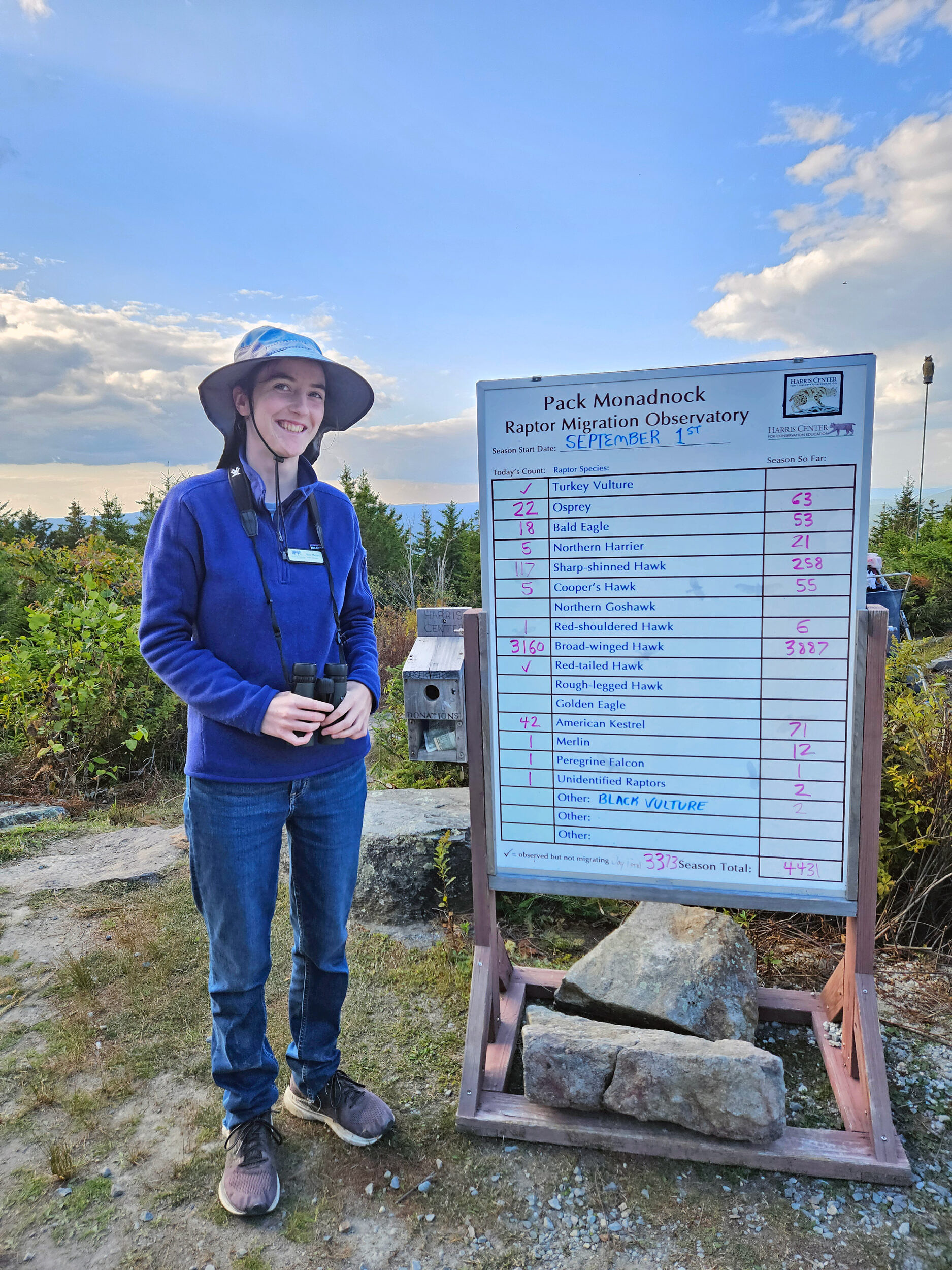
Raptor biologist Kate McKay on the opening day of the Hawk Watch
(photo © Mark Timmerman)
Thank You
As always, we offer big thanks to our site partner, Miller State Park, New Hampshire State Parks, and the Division of Natural and Cultural Resources, for championing our efforts and welcoming us each year.
We’ll end with an excerpt from Kate McKay’s season summary, which will be available in our forthcoming final report:
“I would like to extend a huge thank you to all our volunteers, visitors, and supporters. It has been such a pleasure getting to know so many of you over the last few months and spending time together hawkwatching. I’m extremely grateful for the welcoming community at Pack and the Harris Center, and the work we do would not be possible without the help of our volunteers. I’m going to miss driving up the mountain in the morning, searching for the first raptor of the day, feeding the songbirds, and watching the Hawk Watch bunnies, but most of all, I’m going to miss you guys.”
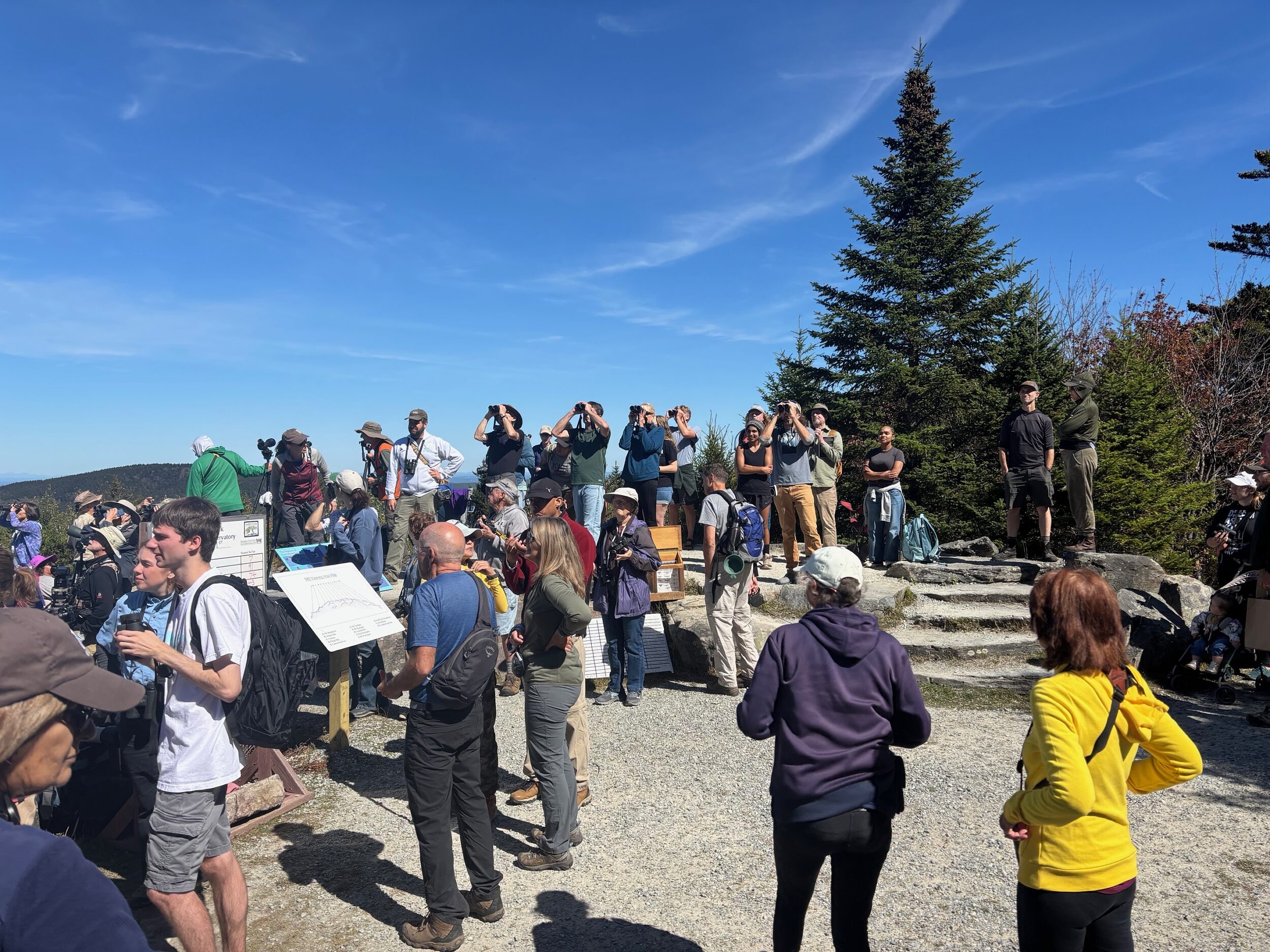
The Pack Monadnock Raptor Observatory welcomed 6,449 visitors in 2025. (courtesy photo)

Your Gift Makes a Difference
Thanks to our incredible community of supporters, the Harris Center continues to protect wild places, educate people of all ages, and conduct vital conservation research. Your generosity makes everything we do possible — from preserving habitat for bobcats and birds to inspiring the next generation of environmental stewards. We invite you to make a gift today to help sustain this important work. On behalf of the turtles, trees, wildflowers, salamanders, and butterflies — and the people who cherish them and our wild places — thank you!


